
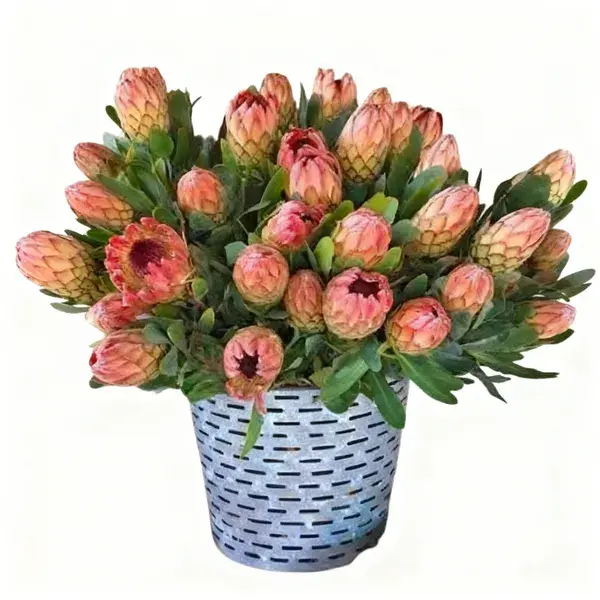
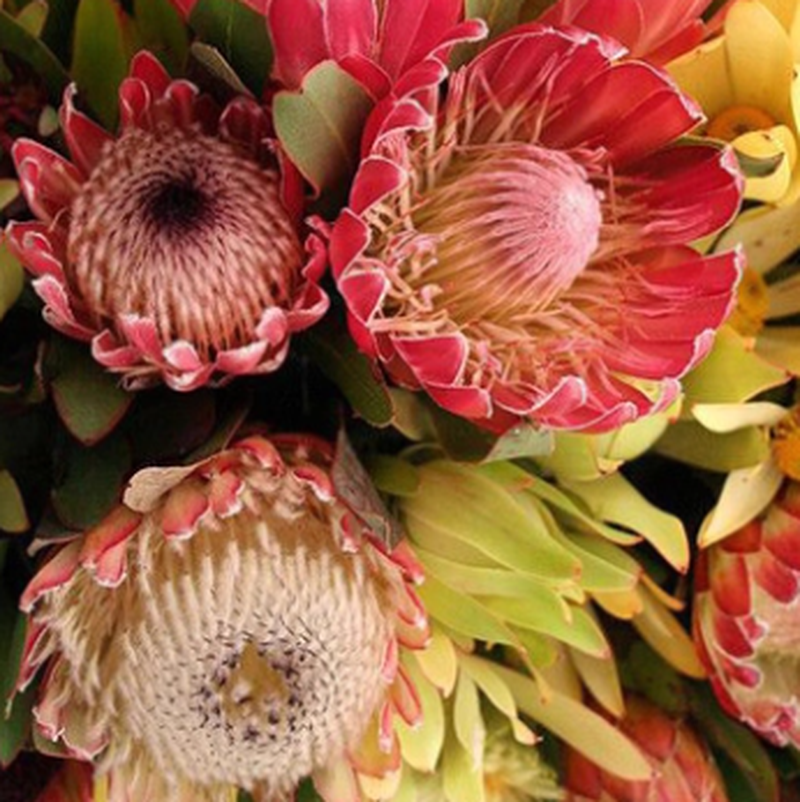



King Protea (Protea cynaroides)
Details & Complete Growing Guide
Plant Overview
The King Protea, also known as Giant Protea, is a perennial evergreen shrub belonging to the Proteaceae family. Native to the Cape Town region of South Africa, it is the national flower of South Africa. Renowned for its enormous flower heads, vibrant colors, and exceptionally long vase life, it is hailed as the “King of Flowers”—a premium cut flower and a striking focal point in gardens worldwide.
Morphological Characteristics
- Unique Flower Structure: Flower heads are composed of numerous small florets, forming a spherical or flattened shape with a diameter of 15-30 cm, surrounded by thick, leathery bracts.
- Vibrant Color Range: Bract colors include red, pink, orange, yellow, white, and some varieties feature stripes or gradient effects that deepen as they mature.
- Leaf Traits: Leathery, oblong leaves with a glossy dark green appearance and slightly serrated edges, adapted for drought resistance.
- Plant Size: Mature plants reach 1-2.5 meters in height with a 1-1.5 meter spread. Moderate growth rate and long lifespan (decades).
Growth Habits
- Climate Preference: Thrives in warm, dry environments with abundant sunlight. Intolerant of frost and waterlogging; suitable for subtropical to temperate regions.
- Temperature Requirements: Optimal growth temperature ranges from 15-28°C (59-82°F). Winter temperatures should not drop below 5°C (41°F) to avoid frost damage.
- Soil Needs: Prefers well-drained, loose soil with an acidic to slightly alkaline pH (6.0-7.5). Avoid heavy, clayey soils.
- Light Requirements: Requires 6-8 hours of direct sunlight daily. Insufficient light results in reduced flowering and smaller blooms.
Ornamental & Practical Value
- Cut Flower Use: Exceptional vase life of 1-2 months, making it a top choice for high-end floral arrangements, wedding decor, and gift bouquets.
- Garden Planting: Ideal for specimen planting or groupings in garden corners or flower bed centers, creating a dramatic visual focal point.
- Symbolism: Represents “dignity, resilience, and good fortune,” commonly used in celebrations, award ceremonies, and formal events to convey profound respect.
Growing Guide
Planting Preparation
- Soil Mix: Combine leaf mold, perlite, and coarse sand in a 3:2:1 ratio. Add a small amount of decomposed sheep manure or bone meal as base fertilizer to ensure loose, non-compacting soil.
- Planting Container: Choose a pot with a diameter of 25-35 cm (10-14 inches) and drainage holes. Add a 3-5 cm (1-2 inch) layer of gravel at the bottom to enhance drainage.
- Seedling Selection: Prefer healthy cuttings (higher survival rate than seeds) with 15-20 cm (6-8 inches) height and 2-3 branches. Avoid weak or diseased seedlings.
Planting Methods
Seed Planting (For Propagation)
- Harvest mature seeds in autumn, remove debris, soak in warm water for 24 hours, then treat with gibberellin solution for 12 hours to improve germination rate.
- Sow seeds in seedling mix, cover with 1-2 cm (0.4-0.8 inch) of soil, mist to keep slightly moist. Place in a 20-25°C (68-77°F) environment; germination occurs in 3-4 weeks.
- Transplant seedlings when they reach 5-8 cm (2-3 inches) in height. Seed-grown plants take 3-4 years to flower.
Cutting Planting (Recommended Method)
- In spring, select semi-hardwood stems, cut 10-15 cm (4-6 inch) cuttings, remove lower leaves, and retain 2-3 top leaves.
- Dip cutting bases in rooting hormone, insert into moist rooting medium (perlite + leaf mold = 1:1) to 1/3 of the cutting length.
- Construct a shade棚, maintain 20-25°C (68-77°F) temperature and 70-80% humidity. Rooting occurs in 4-6 weeks. Transplant rooted cuttings; flowering begins in 1-2 years.
Daily Care
- Light Management: Full sun exposure in spring, autumn, and winter. Provide partial shade in midday summer to avoid intense sunlight. Indoor plants should be placed on south-facing balconies or windowsills.
- Watering Principle: Follow “keep dry rather than wet”—water only when the soil surface is dry, and water thoroughly. Avoid waterlogging. Water 1-2 times weekly in summer, 2-3 weeks in winter.
- Fertilization: Apply dilute organic fertilizer or compound fertilizer once monthly during growing seasons (spring and autumn). Increase phosphorus-potassium fertilizer once before flowering (autumn) to promote bud formation. Stop fertilizing in winter.
- Pruning & Shaping: Remove spent flowers and 1-2 pairs of leaves below the flower head after blooming to encourage branching. Prune overcrowded, diseased, or weak branches in spring to maintain good air circulation and light penetration.
Important Notes
- Pest & Disease Control: Common diseases include leaf spot and root rot—maintain good ventilation and spray with carbendazim regularly for prevention. Common pests: scale insects and aphids—control with imidacloprid EC spray.
- Winter Protection: Move indoors to a sunny location when temperatures drop below 5°C (41°F). Reduce watering to prevent frost damage.
- Repotting Frequency: Repot every 2-3 years. Trim old roots and replace with fresh potting mix during repotting to promote healthy growth.






评价
目前还没有评价