Überblick über die Anlage
1.1 Plant Introduction
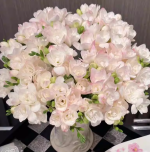
Freesia, scientifically known as Freesia refracta, also called Cape Jasmine or Small Gladiolus, is a perennial bulbous herb belonging to the Iridaceae family. Native to the Cape of Good Hope region in southern Africa, it is highly valued for its pure and elegant flowers and delicate, orchid-like fragrance. A popular choice in horticulture, it serves as an excellent indoor potted plant (acting as a “natural air freshener”) and a common material for bouquets and flower arrangements in the cut flower market, frequently used in weddings, celebrations, and other occasions. Additionally, it is used for extracting essential oils in perfumes and cosmetics.
1.2 Morphological Characteristics
- Elegant Flower Form: Erect flower stems bear terminal racemes with 5-10 funnel-shaped flowers each. Each flower has 6 petals with smooth or wavy edges, presenting a graceful, spreading posture. Some varieties feature striped or blurred-edged petals.
- Rich Color Palette: Common colors include white, pink, red, purple, yellow, and blue. Solid-color varieties exude simplicity and elegance, while variegated varieties offer a lively and unique appearance, catering to diverse aesthetic preferences.
- Slender Leaves: Sword-shaped or linear leaves with a soft texture and emerald green color, growing 15-40 cm long and 0.5-1.5 cm wide. Clustered at the base, they hang naturally, forming an elegant plant shape.
- Bulb Traits: Underground corms are conical or oval-shaped, 1-2 cm in diameter, covered with brown membranous scales that store nutrients to support plant growth and flowering. Mature plants typically reach 30-60 cm in height with a compact form, ideal for potted display.
1.3 Growth Habits
- Climate Preference: Thrives in warm, humid environments with abundant sunlight. Intolerant of extreme cold and heat, suitable for cultivation in temperate to subtropical regions. Avoids intense direct sunlight and waterlogging.
- Temperature Requirements: Optimal growth temperature ranges from 15-25°C (59-77°F). A cold stimulus of 10-15°C (50-59°F) is required during flower bud differentiation to promote bud formation. Temperatures below 5°C (41°F) in winter may cause frost damage, while temperatures above 30°C (86°F) in summer induce dormancy.
- Soil Needs: Prefers loose, well-drained, organic-rich slightly acidic soil (pH 5.5-6.5). Heavy clay soil easily causes corm rot, and alkaline soil hinders plant growth.
- Light Requirements: Requires 4-6 hours of sufficient sunlight daily. Insufficient light results in weak flower stems, reduced flowering, and etiolation. Proper shading is needed during midday summer.
1.4 Ornamental & Practical Value
- Cut Flower Use: With straight stems and a long flowering period (7-10 days per flower, 2-3 weeks per plant), it is an excellent cut flower for bouquets, flower baskets, and table arrangements. It can last 1-2 weeks in a vase, refreshing the air with its fragrance.
- Potted Ornamental: Compact plant form and fragrant flowers make it suitable for placement in living rooms, bedrooms, and balconies. It decorates spaces while emitting a pleasant aroma, making it an ideal indoor potted plant.
- Garden Application: In warm regions, it can be used in garden flower beds and borders. Planted with other bulbous flowers (such as tulips and hyacinths), it creates a colorful landscape effect.
- Symbolism: Represents “purity, happiness, and refreshment,” often given as a gift to convey good wishes. It also symbolizes “trust” and “sincere emotions.”
Growing Guide
2.1 Planting Preparation
2.1.1 Corm Selection & Treatment
Choose plump, undamaged, pest-free healthy corms with a diameter of 1-1.5 cm (the larger the corm, the stronger the flowering ability). Before planting, soak corms in a 50% carbendazim 500x solution for 20-30 minutes, then air-dry until the surface is dry to effectively prevent corm rot. Trim off any old roots if present.
2.1.2 Soil Preparation
Two high-quality soil formulas are recommended: ① 4 parts leaf mold + 3 parts garden soil + 2 parts perlite + 1 part decomposed organic fertilizer; ② 5 parts peat moss + 3 parts coarse sand + 1 part coco coir + 1 part bone meal. After preparation, disinfect the soil by exposing it to sunlight for 1-2 days or spraying with carbendazim solution to kill pathogens and insect eggs.
2.1.3 Container Selection
For potted plants, choose a ceramic or plastic pot with a diameter of 15-20 cm and depth of 20-25 cm, with drainage holes at the bottom to avoid waterlogging. For group planting, 3-5 corms can be planted per pot to ensure sufficient growing space. For outdoor planting, select a high-lying, well-drained area, plow 30 cm deep, and mix in decomposed organic fertilizer to improve soil quality.
2.2 Planting Time & Steps
2.2.1 Planting Time
Freesia is best planted in autumn: September-October in northern regions and October-November in southern regions. At this time, the temperature is 15-20°C (59-68°F), which is conducive to corm germination and root growth. Avoid planting too early (high temperatures easily cause rot) or too late (low temperatures affect germination).
2.2.2 Planting Steps
- Line the bottom of the pot with 3-5 cm of ceramsite or gravel to enhance drainage. Fill the pot halfway with potting soil, add a small amount of decomposed sheep manure as base fertilizer, and mix gently with the soil.
- Place the treated corms in the pot with buds facing upward, keeping a spacing of 5-8 cm between corms to avoid overcrowding. For outdoor planting, space corms 10 cm apart in rows 20 cm apart, with buds facing upward.
- Cover with soil to a thickness of 2-3 times the corm diameter (about 2-4 cm). Planting too shallow may cause corms to topple, while planting too deep will delay germination.
- Water thoroughly after planting with slow water flow to avoid washing away corms. Place the pot in a well-ventilated, sunny location for maintenance.
2.3 Daily Care & Management
2.3.1 Water Management
Follow the “water when dry” principle: water only when the top 2-3 cm of soil is dry, and water thoroughly without leaving standing water in the pot. Keep the soil slightly moist before germination to avoid corm rot. Increase watering frequency to once a week during the growing period (after leaves unfurl). Reduce watering appropriately during flowering to prevent petal wilting. Gradually decrease watering after flowering and stop completely when leaves wither to allow corms to enter dormancy.
2.3.2 Light & Temperature Control
Ensure 4-6 hours of sunlight daily during the growing period; place on a south-facing balcony or windowsill. Use grow lights if sunlight is insufficient. During flower bud differentiation (usually 1-2 months after planting), maintain a low-temperature environment of 10-15°C (50-59°F) for 2-3 weeks to promote bud formation. High temperatures during this period may result in leaf growth without flowering. Move indoors for warmth when winter temperatures drop below 5°C (41°F) to avoid frost damage. Provide shade and cooling in high summer temperatures to prevent leaf yellowing and withering.
2.3.3 Fertilization Methods
No fertilization is needed from planting until germination to avoid root burn. After leaves unfurl (about 3-4 leaves), apply dilute balanced NPK fertilizer (1:1:1 ratio) once a month to promote foliage growth. During flower bud differentiation (when 5-6 leaves appear), switch to phosphorus and potassium-rich fertilizer such as potassium dihydrogen phosphate solution, applying every 2 weeks for 2-3 consecutive applications to promote plump buds and flowering. Stop fertilization during flowering. After flowering, apply 1-2 applications of compound fertilizer to accumulate nutrients in the corms. Avoid getting fertilizer on leaves; if contact occurs, rinse immediately with clean water.
2.3.4 Pruning & Support
If plants grow too tall (exceeding 40 cm), they may topple easily. Insert thin bamboo sticks or flower supports in a timely manner and gently secure the flower stems with soft string. After flowering, promptly cut off spent flowers and stems, retaining leaves to allow photosynthesis to continue nourishing the corms. Trim withered leaves only after they turn completely yellow and dry.
2.4 Corm Harvesting & Storage
After freesia blooms, leaves gradually wither as corms enter dormancy. Once leaves are completely withered, turn the pot upside down to remove corms, shake off soil, and trim off withered roots and leaves. Select plump, undamaged corms, soak them in carbendazim solution for 10 minutes, then air-dry until the surface is dry.
For storage, place corms in breathable mesh bags or paper boxes with a small amount of dry peat moss or vermiculite. Store in a cool, dry, well-ventilated environment at 5-10°C (41-50°F), avoiding moisture and high temperatures to prevent rot or premature germination. Retrieve and replant in autumn for optimal flowering quality.
2.5 Pest & Disease Control
2.5.1 Common Diseases
- Root Rot: Caused by waterlogging or infected corms, characterized by corm rot and yellowing/wilting leaves. Prevention: Select healthy corms, disinfect before planting, and ensure good soil drainage. Treatment: For early-stage infections, dig up corms, cut off rotten parts, disinfect with carbendazim, and replant, or spray with hymexazol solution for root irrigation.
- Leaf Spot: Brown spots appear on leaves and gradually expand, leading to leaf withering in severe cases. Prevention: Maintain good ventilation and avoid prolonged leaf dampness. Treatment: Promptly remove infected leaves and spray with mancozeb or chlorothalonil solution every 7-10 days for 2-3 consecutive applications.
2.5.2 Common Pests
- Aphids: Cluster on leaf tips and flower stems, sucking sap and causing leaf curling and stem deformation. Control: Rinse leaves with soapy water or clean water, or spray with imidacloprid EC solution every 5-7 days until pests are eliminated.
- Thrips: Damage flowers and leaves, causing petal spots and leaf chlorosis. Control: Keep the environment clean and remove weeds promptly. Treatment: Spray with thiamethoxam or spinetoram solution, focusing on flowers and leaf undersides.
2.6 Important Notes
- Freesia has a strong fragrance; some people may be sensitive to it. Ensure good ventilation when placing in bedrooms to avoid discomfort from prolonged exposure in enclosed spaces.
- If etiolation occurs (slender leaves, weak stems) during cultivation, reduce watering, increase sunlight exposure, or spray chlormequat chloride solution to control plant height.
- For outdoor planting, cover the soil surface with 5-10 cm of straw or fallen leaves in winter to insulate corms and prevent frost damage.
- Freesia is a cross-pollinating plant. To collect seeds, artificial pollination is required. After successful pollination, seed pods mature and seeds can be harvested for sowing. However, seed-grown plants grow slowly and take 3-4 years to flower, making them generally not recommended for home cultivation.





 English
  German
 Spanish
 Japanese




Bewertungen
Es sind noch keine Bewertungen vorhanden.