




Tulip (Tulipa gesneriana)
Details & Complete Growing Guide (Garden & Potted)
Überblick über die Anlage
1.1 Plant Introduction
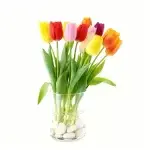
Tulip, scientifically known as Tulipa gesneriana, also called Persian Lily or Bulbous Iris, is a perennial bulbous herb belonging to the Liliaceae family. Native to Turkey and Central Asia, it was later cultivated and improved in the Netherlands, becoming the world-famous “Queen of Flowers” and the national flower of the Netherlands. Renowned for its elegant flower forms, vibrant colors, and diverse varieties, it is a core element of early spring garden landscapes. Also a popular choice for potted plants and cut flowers, it symbolizes “nobility, romance, and blessings” in important occasions such as weddings and celebrations.
1.2 Morphological Characteristics
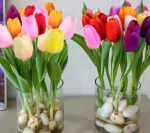
- Diverse Flower Forms: Solitary flowers bloom at the top of stems, with various forms including cup-shaped, bowl-shaped, bell-shaped, lily-shaped, and fringed. Flower diameter typically ranges from 5-10 cm, with some double varieties reaching over 12 cm. Petals are thick and glossy.
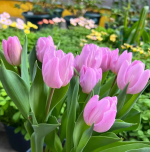
- Vibrant Color Palette: Covers basic colors such as red, pink, orange, yellow, purple, white, and black (deep purple nearly black), as well as special colors like variegated, gradient, and striped. Examples include the pink-white gradient of “Miss Holland” and the deep purple-black of “Queen of Night,” catering to diverse aesthetic preferences.
- Simple Leaf Shape: Basal leaves, usually 2-4, are strap-shaped lanceolate or ovate-lanceolate, 10-25 cm long and 1-6 cm wide. Dark green or with purplish-brown markings, leaves wrap around the flower stem at the base, forming natural plant support.
- Bulb Traits: Underground bulbs are flattened conical or oval-shaped, 2-5 cm in diameter, covered with brown or pale yellow membranous scales. The inner side of scales stores abundant starch and nutrients to support plant growth and flowering. The bulb base has a shortened stem disc and residual root scars.
- Pflanzenhöhe: Varies significantly by variety. Dwarf varieties (15-20 cm) are suitable for pots; medium-tall varieties (30-50 cm) for garden planting and cut flowers; tall varieties (over 60 cm) for landscape use.
1.3 Growth Habits
- Climate Preference: Thrives in warm, humid winters and cool, dry summers—atypical “winter-growing” bulbous flower. Cold-tolerant but intolerant of high temperatures and intense sunlight, entering deep dormancy in high summer heat.
- Temperature Requirements: Optimal germination temperature is 5-10°C (41-50°F), growth temperature 15-20°C (59-68°F), and flowering temperature 15-25°C (59-77°F). Can tolerate short-term -15°C (5°F) in winter (with coverage), but flowers are prone to browning from frost damage below 0°C (32°F) during blooming. Flower bud differentiation requires 30-40 days of cold stimulation below 17°C (63°F); high temperatures inhibit bud formation.
- Soil Needs: Prefers loose, well-drained, organic-rich slightly acidic to neutral soil (pH 6.0-7.0). Avoids heavy clay and saline-alkaline soils—heavy clay causes bulb rot, while saline-alkaline soil leads to leaf chlorosis and poor growth.
- Light Requirements: Needs 6-8 hours of direct sunlight daily. Insufficient light results in weak, leggy stems, smaller flowers, and faded colors. However, dormant bulbs require cool, dry conditions in summer to avoid rot from high temperatures.
- Water Needs: Keep soil moist during the growing period but avoid waterlogging. Higher water requirements during bulb germination and flower stem growth; gradually reduce watering after flowering, keeping soil slightly dry to promote nutrient accumulation in bulbs.
1.4 Ornamental & Practical Value
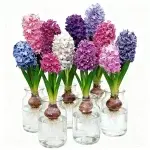
- Garden Landscaping: A core early spring garden flower, suitable for large-scale planting on lawns and flower beds, or mixed with other bulbous flowers (hyacinths, crocuses, grape hyacinths) to form colorful borders. Also used for edge decoration in parks and courtyards, and rock garden matching.
- Potted Ornamental: Dwarf and early-flowering varieties are ideal for pots, suitable for balconies, windowsills, and living rooms. Blooming during festivals like Spring Festival and Valentine’s Day, they are popular New Year flowers. Can be planted individually or in multi-variety combinations for excellent display effects.
- Cut Flower Use: Medium-tall varieties with straight stems and concentrated flowering periods (5-7 days per flower, 10-15 days per plant) are excellent cut flowers for bouquets, arrangements, and table centerpieces. Before arranging in vases, remove lower leaves and cut stems at an angle to extend the viewing period by 5-7 days.
- Symbolism: Different colors carry distinct meanings—red symbolizes “passionate love,” pink represents “romance and warmth,” white denotes “purity and nobility,” yellow symbolizes “joy and good fortune,” and purple represents “mystery and elegance.” An ideal flower for expressing emotions.
Growing Guide (Garden & Potted)
2.1 General Preparation
2.1.1 Bulb Selection & Treatment
Selection Criteria: Prioritize healthy bulbs that are plump, firm, undamaged, mold-free, and pest-free, with a diameter of 3-4 cm (larger bulbs have stronger flowering ability). High-quality bulbs are heavy, firm to the touch, and have intact, non-rotten basal plates.
Variety Selection: Choose based on planting scenarios—medium-tall varieties (e.g., “Apeldoorn,” “Golden Parade”) for garden planting; dwarf varieties (e.g., “Little Black Sambo,” “Cupido”) for pots; tall varieties (e.g., “Leen van der Mark,” “French Light”) for cut flowers.
Bulb Treatment: Peel off dry outer scales to expose healthy white skin before planting. Trim old roots from the bulb base with sterilized scissors. Soak bulbs in 50% carbendazim 500x solution or chlorothalonil 800x solution for 20-30 minutes. Remove and air-dry in a cool, ventilated place for 1-2 days until the bulb surface is completely dry—avoid planting damp bulbs to prevent rot.
2.1.2 Planting Time
Core planting principle: “Plant before low temperatures to ensure bulbs experience natural cold during germination.” Adjust specific times by region: September-October in northern regions (Northeast, North China) when temperatures are 10-20°C (50-68°F), favorable for root germination; October-November in southern regions (East China, South China) to avoid bulb rot from high temperatures if planted too early; August-September in high-altitude areas to take advantage of cool climates for early growth. Avoid late planting—insufficient cold affects flower bud differentiation, leading to no flowering.
2.2 Garden Planting Method (Suitable for Yards & Gardens)
Garden Planting
2.2.1 Site Selection & Preparation
Choose a high-lying, well-drained, sunny site, avoiding low-lying waterlogged areas. Plow the site deeply 30-40 cm 1-2 weeks in advance, removing stones, weed roots, and other debris. Apply 2000-3000 kg of decomposed sheep manure or compost per mu, combined with 50 kg of superphosphate and 30 kg of potassium sulfate. Spread evenly and plow into the soil to improve fertility and drainage. For heavy clay soil, mix with 1/3 perlite or coarse sand; for alkaline soil, add sulfur powder to adjust pH to 6.0-7.0.
2.2.2 Planting Steps
- Bed Preparation & Furrowing: Create beds 1.2-1.5 m wide and 15-20 cm high with 30 cm wide drainage ditches between beds to prevent waterlogging from rain. Dig planting furrows 10-15 cm deep (3 times the bulb diameter) at 20-25 cm row spacing.
- Bulb Placement: Place treated bulbs in furrows with shoots facing upward. Adjust plant spacing by variety—10-15 cm for dwarf varieties, 15-20 cm for medium-tall varieties—to ensure sufficient growing space and avoid overcrowding.
- Cover with Soil: Cover bulbs with fine soil to a thickness of 2-3 times the bulb diameter (5-8 cm). Gently compact the soil after covering to prevent bulb toppling or frost damage from loose soil.
- Watering & Establishment: Water thoroughly after planting with slow, even water flow until the soil is completely moist. Add more soil if it settles after watering. Keep soil slightly moist until bulbs germinate.
2.2.3 Garden Care Tips
- Water Management: Water every 10-15 days in winter when rainfall is scarce to keep soil slightly moist; water every 7-10 days during vigorous spring growth, increasing slightly after flower stems emerge. Gradually reduce watering after flowering and stop completely after petals fall to promote bulb dormancy. Clean drainage ditches promptly during rainy seasons to avoid waterlogging.
- Fertilization Management: Apply dilute balanced NPK fertilizer (1:1:1) once bulbs sprout (leaves 5-10 cm tall) to promote foliage growth. Switch to phosphorus-potassium-rich fertilizer (e.g., potassium dihydrogen phosphate solution) every 2 weeks for 2-3 applications after flower stems emerge to promote large, colorful flowers. Apply compound fertilizer once after flowering to accumulate nutrients in bulbs, then stop fertilizing.
- Cold Protection: In northern regions with temperatures below -15°C (5°F) in winter, cover the soil surface with 5-10 cm of straw, fallen leaves, or plastic film to protect bulbs from frost damage. Remove covers promptly when temperatures rise in early spring to avoid hindering new shoot germination.
- Weed Control: Remove weeds promptly during the growing period to avoid nutrient and water competition. Be careful not to damage bulbs and roots while weeding.
2.3 Potted Planting Method (Suitable for Home Decoration)
Potted Planting
2.3.1 Container & Soil Preparation
Container Selection: Use ceramic or plastic pots 15-25 cm in diameter and 20-30 cm deep with multiple drainage holes to avoid waterlogging. For single-variety planting, a 15 cm diameter pot can hold 3-5 bulbs; for mixed planting, a 25 cm diameter pot can hold 5-8 bulbs (pay attention to variety matching for coordinated colors and heights).
Soil Formulation: Recommended formulas: ① 4 parts leaf mold + 3 parts garden soil + 2 parts perlite + 1 part decomposed organic fertilizer; ② 5 parts peat moss + 2 parts coarse sand + 2 parts coco coir + 1 part bone meal. Disinfect soil after preparation by exposing to sunlight for 2 days or spraying with carbendazim solution to kill pathogens and insect eggs.
2.3.2 Planting Steps
- Pot Bottom Treatment: Line the pot bottom with 3-5 cm of ceramsite or gravel as a drainage layer. Fill 1/3 of the pot with potting soil, add a small amount of decomposed sheep manure as base fertilizer, and mix gently with the soil.
- Bulb Placement: Place disinfected bulbs in the pot with shoots facing upward, keeping 3-5 cm spacing between bulbs to avoid overcrowding. The top of bulbs should be slightly 1-2 cm above the soil surface (dwarf varieties can be fully covered).
- Fill with Soil: Add potting soil to cover bulbs up to the base of shoots, gently compacting the soil to avoid looseness.
- Watering & Establishment: Water thoroughly after planting until water drains from the pot bottom. Place the pot in a cool, ventilated area (5-10°C/41-50°F) to allow bulbs to acclimate. Move to a sunny location after shoots emerge.
2.3.3 Potted Care Tips
- Light Management: Keep in a cool place before shoot germination to avoid direct sunlight. Move to a south-facing balcony or windowsill after shoots emerge to ensure 6-8 hours of daily sunlight. Use grow lights if sunlight is insufficient to prevent leggy growth. Provide proper shading after flowering to extend the blooming period.
- Water Management: Follow the “water when dry” principle—water only when the top 2-3 cm of soil is dry, and water thoroughly. Avoid waterlogging. Reduce watering frequency to every 10-15 days when indoor temperatures are low in winter; water every 7-10 days during vigorous spring growth. Avoid watering leaves and flowers to prevent disease.
- Temperature Control: Maintain 5-10°C (41-50°F) during bulb germination to promote root growth; 15-20°C (59-68°F) during the growing and flowering period (temperatures above 25°C/77°F shorten the blooming period). Move to a warm location if indoor temperatures drop below 5°C (41°F) in winter to avoid leaf frost damage.
- Fertilization Management: Apply dilute compound fertilizer once a month after leaves unfurl (3-4 leaves). Apply potassium dihydrogen phosphate solution every 2 weeks after flower stems emerge to promote flowering. Apply compound fertilizer once after flowering, then stop fertilizing until leaves wither.
- Support & Stabilization: For medium-tall varieties, insert thin bamboo sticks or flower supports to prop up flower stems if plants tend to topple. Secure stems gently with soft string to avoid damage.
2.4 Bulb Harvesting & Storage (Re-blooming Management)
Tulip bulbs can re-bloom, but flowering quality is usually lower than the first year. For home gardeners wanting to preserve bulbs, follow these harvesting and storage steps:
- Harvest Time: Cut off flower stems promptly after flowering, retaining leaves. Continue normal watering and fertilization to allow leaves to photosynthesize and accumulate nutrients in bulbs. Dig up bulbs from the garden or remove from pots after leaves completely wither and turn yellow in summer.
- Bulb Treatment: Shake off soil from bulb surfaces, trim withered leaves and roots. Select plump, undamaged, pest-free bulbs, discarding weak or rotten ones. Soak healthy bulbs in carbendazim 500x solution for 10-15 minutes, remove, and air-dry in a cool, ventilated place for 2-3 days until completely dry.
- Storage Method: Place dried bulbs in breathable mesh bags or paper boxes with a small amount of dry peat moss or vermiculite. Store in a cool, dry, well-ventilated environment at 15-20°C (59-68°F), avoiding direct sunlight and moisture to prevent rot or premature germination. Retrieve and replant in autumn.
2.5 Pest & Disease Control
2.5.1 Common Diseases
- Bulb Rot: Caused by waterlogging, infected bulbs, or deep planting—characterized by soft, moldy bulbs and yellowing/wilting leaves. Prevention: Select healthy bulbs, disinfect before planting, ensure good drainage. Treatment: Dig up bulbs promptly in early stages, cut off rotten parts, disinfect with carbendazim, and replant, or spray hymexazol solution for root irrigation.
- Gray Mold: Prone to occur in low-temperature, high-humidity environments—brown spots appear on leaves and flower stems, gradually expanding with gray mold covering, leading to flower rot in severe cases. Prevention: Maintain good ventilation, avoid prolonged leaf dampness. Treatment: Remove infected leaves and flowers promptly, spray procymidone or iprodione solution every 7-10 days for 2-3 applications.
- Virus Disease: Characterized by yellow-green mottled leaves, malformed flowers, faded colors, and stunted growth. Prevention: Select virus-free bulbs, control aphid vectors. Treatment: Remove and destroy infected plants promptly to prevent spread.
2.5.2 Common Pests
- Aphids: Cluster on leaf and flower stem tips, sucking sap and causing leaf curling, stem deformation, and virus transmission. Control: Rinse leaves with water or soapy water, or spray imidacloprid EC solution every 5-7 days until pests are eliminated.
- Grubs (Scarab Larvae): Damage underground bulbs by feeding on scales and roots, leading to poor growth or wilting. Prevention: Disinfect soil with phoxim EC before planting. Treatment: Apply chlorpyrifos granules to soil or water with phoxim solution.
- Spider Mites: Prone to occur in high-temperature, dry environments—feed on leaf undersides, causing chlorosis, yellowing, and leaf drop. Control: Increase air humidity by regular misting; spray abamectin or pyridaben solution, focusing on leaf undersides.
2.6 Important Notes
- Tulip bulbs contain mild toxins (tulipalin), so keep away from children and pets to prevent ingestion. Wash hands thoroughly after handling bulbs and wear gloves during pruning.
- To extend the viewing period of potted tulips after flowering, move them to a cool (10-15°C/50-59°F), well-ventilated location, avoiding high temperatures and direct sunlight.
- Avoid continuous cropping of garden-planted tulips. After 2-3 years of planting, change the site or thoroughly disinfect the soil (spreading quicklime or exposing to sunlight) to prevent soil-borne diseases.
- When purchasing bulbs, choose “5°C bulbs” or “9°C bulbs” that have undergone cold treatment—these require no additional cold stratification and will flower directly after planting. “Natural bulbs” without cold treatment need 4-6 weeks of refrigeration (5-10°C/41-50°F) before planting to flower normally.
- If not planning to retain bulbs after flowering, pull out plants directly, discard bulbs, and purchase new ones the following year to ensure flowering quality.








Bewertungen
Es sind noch keine Bewertungen vorhanden.