Fortune-Bringing Greenery + Elegant Appearance, A Must-Have Easy-Care Plant For Desks
Details zum Produkt
Wesentliche Merkmale
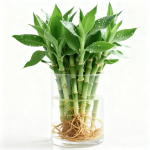
An evergreen upright shrub of the Asparagaceae family, also known as “Cloud Bamboo” with elegant and slender plant shape.
Fine pinnate leaves with bright green color, exuding an elegant scholarly atmosphere, adding refinement to indoor spaces.
Carries the auspicious meaning of “promoting academic performance, assisting career, and enhancing Wenchang luck” – popular for student studies and office environments.
Shade-tolerant, drought-resistant, and low-maintenance – easy to grow even for gardening beginners.
Absorbs tiny dust particles in the air and regulates indoor humidity, creating a fresh and comfortable space.
Combines practical value with spiritual sustenance, suitable for both decoration and meaning expression.
Anwendungsszenarien
Study Desk: Small potted plants fit perfectly on desks, matching the study/work atmosphere and symbolizing academic progress.
Wohnzimmer Display: Medium to large plants with exquisite pots decorate living room corners, enhancing space elegance.
Office Areas: Shade tolerance adapts to office environments, relieving work stress and adding vitality.
Verschenken: Symbolizes “steady progress and academic success”, ideal for examinees, new professionals, and friends.
Bedroom Decoration: Small potted plants on bedroom windowsills – fine leaves don’t block light, and purify local air for better rest.
Choose terracotta or purple sand pots with drainage holes, 2-3cm larger in diameter than the root ball – avoid oversized pots to prevent waterlogging.
Soil formula: Leaf mold + garden soil + river sand = 2:1:1, or use foliage plant-specific soil mixed with a small amount of decomposed organic fertilizer as base fertilizer. Ensure loose, breathable, and moderately fertile soil – avoid heavy compacted soil.
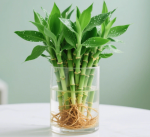
Water Culture
Container selection: Use transparent glass or ceramic bottles matching the plant size, convenient for observing root growth.
Water quality requirement: Prioritize tap water (left standing for over 24 hours), purified water, or boiled water. Avoid direct tap water to prevent chlorine damage to roots.
2Light Requirements
Thrives in semi-shady environments with bright indirect light (e.g., studies, north-facing windowsills, living room corners) – 1-3 hours of indirect light daily is sufficient.
Avoid direct sunlight: Provide full shade when temperature exceeds 30℃ in summer to prevent leaf scorching, yellowing, and drying.
Insufficient light causes leggy vines and sparse leaves – move to bright indirect light for 1-2 days a week to maintain a compact shape.
3Watering (Soil Culture) / Water Change (Water Culture)
Soil Culture Watering
Follow “Water only when dry, water thoroughly when watering” – water after the top 3-4cm of soil dries out. Avoid frequent watering to prevent root rot.
Spring & Autumn: Water every 10-15 days during the growing period, pouring slowly along the pot edge for full soil absorption.
Summer: Water every 7-10 days (high temperature accelerates evaporation), mist around leaves to maintain 40%-60% air humidity.
Winter: Growth slows below 10℃, water every 20-30 days to keep soil slightly moist – avoid waterlogging and root freezing.
Water Culture Water Change
Water change frequency: Every 7-10 days in spring/autumn, 5-7 days in summer, 15-20 days in winter – avoid water deterioration and root rot.
Water change method: Pour out old water, rinse the container, trim rotten roots, add new water to submerge 1/2-2/3 of the roots (do not fully submerge).
4Temperature Adaptation
Optimal growth temperature: 18-25℃ – foliage grows steadily with bright green color in this range.
Winter protection: Poor cold tolerance (susceptible to freezing below 5℃) – move indoors to a warm place, away from cold drafts, maintain temperature above 5℃.
Summer cooling: Move to well-ventilated shaded areas when temperature exceeds 32℃, enhance air circulation to avoid leaf wilting from stuffiness.
5Befruchtung
Soil Culture Fertilization
Fertilize mainly in spring and autumn (growing periods). Stop fertilizing in high summer and low winter temperatures.
Fertilize once a month – apply diluted fertilizer along the pot edge, then water lightly to aid root absorption and prevent root burn.
Water Culture Fertilization
Fertilization time: Same as soil culture – only fertilize in spring and autumn growing periods.
Fertilizer selection: Use water culture-specific nutrient solution, diluted to 1/2 of the recommended concentration according to the instructions.
Fertilization frequency: Add diluted nutrient solution when changing water each time – avoid strong fertilizer to prevent root damage.
6Pruning & Shaping
Prune best in spring and autumn growing periods – promptly trim leggy, weak, yellow, or dead branches to avoid nutrient consumption.
Shaping method: For compact shape, shorten overlong branches to promote side shoot growth. For trailing or climbing shapes, set up small brackets to guide branch growth.
Leaf cleaning: Regularly wipe dust on leaf surfaces with a damp cloth to keep leaves green and glossy, and facilitate photosynthesis.
7Repotting (Soil Culture) / Transfer to Soil (Water Culture)
Soil culture repotting: Repot every 1-2 years, best in spring (March-April). Remove some old soil during repotting, trim rotten roots, and replace with new nutrient soil.
Water to soil transfer: After 1 year of water culture, transfer to soil for more stable growth. Transplant with original water culture roots, plant in prepared soil, water thoroughly to settle roots, and place in shade for 1-2 weeks to acclimate.
8Schädlings- und Krankheitsbekämpfung
Häufige Krankheiten: Leaf spot and root rot, mostly caused by waterlogging and poor ventilation. Spray carbendazim solution once a week for 2-3 consecutive weeks at the initial stage, and improve ventilation and water control.
Häufige Schädlinge: Aphids, scale insects, spider mites – wipe leaves with alcohol-soaked cotton for small infestations. For severe infestations, spray foliage plant-specific insecticide, ensuring full coverage of leaf surfaces and undersides.
Bewertungen
Es sind noch keine Bewertungen vorhanden.
Seien Sie der Erste, der “Ten-Piece Set of Ficus Benjamina + Small Bag of Nutrient Solution (Pot Not Included)” bewertet.” Antwort abbrechen
MAECENAS IACULIS
Vestibulum curae torquent diam commodo parturient penatibus nunc dui adipiscing convallis bulum parturient suspendisse parturient a.Parturient in parturient scelerisque nibh lectus quam a natoque adipiscing a vestibulum hendrerit et pharetra fames nunc natoque dui.
ADIPISCING CONVALLIS BULUM
Vestibulum penatibus nunc dui adipiscing convallis bulum parturient suspendisse.
Abitur parturient praesent lectus quam a natoque adipiscing a vestibulum hendre.
Scelerisque adipiscing bibendum sem vestibulum et in a a purus lectus faucibus lobortis tincidunt purus lectus nisl class eros.condimentum a et ullamcorper dictumst mus et tristique elementum nam inceptos hac parturient scelerisque vestibulum amet elit ut volutpat.




 English
  German
 Spanish
 Japanese






Bewertungen
Es sind noch keine Bewertungen vorhanden.