Money String Succulent - Product Details & Care Guide
Money String Succulent (Crassula perforata)
Weave Wealth + Cute Appearance, An Easy-Care Fortune-Bringing Green Plant For Beginners
Details zum Produkt
Wesentliche Merkmale
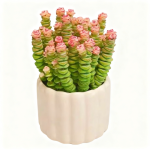
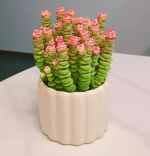
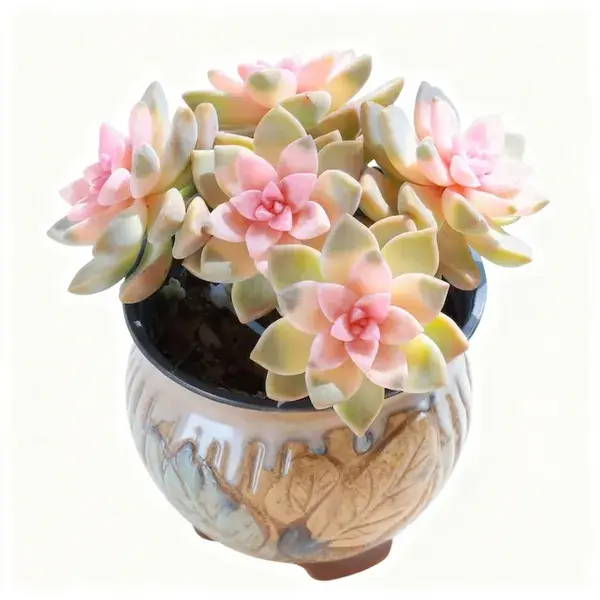
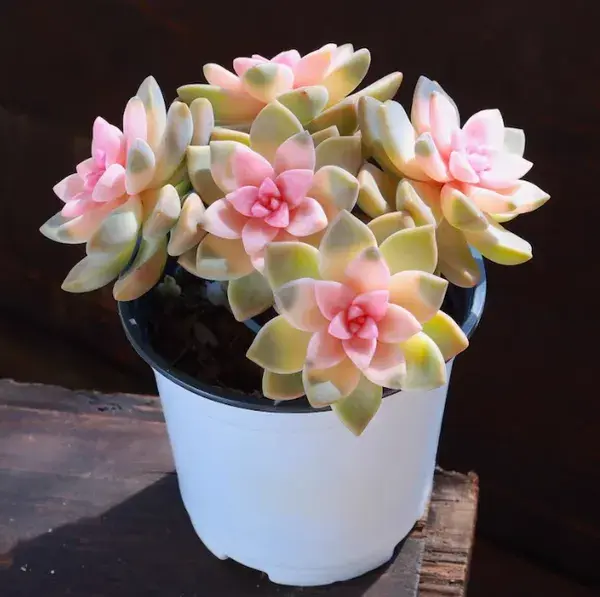
A succulent plant of the Crassulaceae family, named for its plump elliptical leaves arranged closely opposite each other, resembling strings of stacked copper coins – a recognized "fortune-attracting" auspicious green plant.
Leaf color ranges from emerald green to deep green year-round. Under sufficient light, leaf edges turn reddish, with plump and thick leaves and a compact, neat plant shape, exuding a cute and lovely texture.
Symbolizes "attracting wealth and treasure, prosperous fortune, and steady progress" – a "gateway plant" for gardening beginners with strong adaptability, drought tolerance, and low maintenance requirements.
Leaves can absorb tiny dust particles in the air and release oxygen, suitable for long-term indoor placement, combining auspicious meaning, ornamental value, and practical functions.
Requires no frequent care and grows steadily, making it an excellent choice for decorating spaces and conveying good wishes to relatives and friends.
Anwendungsszenarien
Desk Potting: Small money string placed on desks or office tables, symbolizing "rolling wealth" – compact shape saves space and relieves eye strain.
Wohnzimmer Display: Medium to large clumping money string with primitive pots placed in the wealth corner or entrance cabinet of the living room, serving as a "fortune-enhancing ornament" to improve space style.
Balkon-Gartenbau: Combined with other succulents in arrangements or placed alone on balcony shelves – leaf edges turn red under sufficient light, creating a strong atmosphere.
Verschenken: Packaged as gifts for friends opening businesses, new professionals, and elders, symbolizing "prosperous business and good fortune" – both heartfelt and attractive.
Arbeitszimmer Dekoration: Placed on study bookshelves or windowsills, the emerald green leaves and auspicious meaning add good luck and vitality to study and work.
Wachstumsstatus: Plump non-wilted leaves, closely arranged, pest-free, with original soil clod
Merkmale der Sorte: Strong water storage capacity in leaves, growing season in spring and autumn, semi-dormant in summer, strong cold tolerance (can withstand 5℃ low temperature)
Pflege- und Anzuchtanleitung
1Pot & Soil: Ventilation & Drainage Are Key to Attracting Wealth
Bevorzugen Sie Terrakotta- oder grobe Keramiktöpfe mit Entwässerungslöchern, die im Durchmesser 1-2 cm kleiner sind als die Baumkrone - vermeiden Sie übergroße Töpfe, um Wurzelfäule durch Staunässe zu vermeiden.
Money string has a compact shape; small pots are more conducive to shape control and avoiding leggy growth.
Soil formula: Granular soil (akadama + maifan stone + lava rock) + nutrient soil = 6:4, or use succulent-specific soil mixed with a small amount of slow-release fertilizer (buried at the bottom, away from roots). Ensure soil is loose, breathable, and non-compacted for drainage and root respiration.
2Light Requirements: Sufficient Light for "Red-Edged Money String"
Need sufficient light in spring, autumn, and winter – 3-5 hours of direct sunlight daily (south-facing balcony/windowsill is best). The more sufficient the light, the closer the leaf arrangement, the more obvious the red leaf edges, and the neater the plant shape.
Summer shade: Provide 40% shade when temperature exceeds 32℃ (use sunshade net or move to scattered light area) to avoid leaf scorching, yellowing, and rotting.
Insufficient light causes sparse, elongated leaves, light color, and leggy stems – supplement light in time with succulent grow lights (3-4 hours daily) to restore compact shape.
3Watering Principles: Better Dry Than Wet, Avoid Waterlogging
Streng befolgen "Nur bei Trockenheit gießen, beim Gießen gründlich wässern"." – water only when soil is completely dry (test with a toothpick: no moisture when pulled out) or leaves are slightly wilted and soft. Avoid frequent watering to prevent root rot.
Spring & Autumn: Water every 10-15 days during the growing season, pour slowly along the pot edge for full soil absorption. Avoid splashing water into leaf gaps (prevent bacteria growth and leaf rot).
Bewässerung im Sommer: Während der Halbschlafphase weniger gießen - alle 20-30 Tage "Überlebenswasser" gießen (eine kleine Menge am Topfrand, um die Erde leicht feucht zu halten), um Schwarzfäule durch hohe Temperaturen und Feuchtigkeit zu vermeiden.
Winter Bewässerung: Kontrollieren Sie die Bewässerung, wenn die Temperatur unter 5℃ liegt - gießen Sie alle 30-40 Tage oder stellen Sie die Bewässerung ganz ein, halten Sie den Boden trocken, um ein Einfrieren der Wurzeln zu verhindern.
4Temperature Adaptation: Optimal 15-28℃ for Steady Growth
Optimal growth temperature: 15-28℃ – leaves are plump, growth is rapid, plant shape is compact, and leaf edges are prone to reddening in this range.
Winter protection: Move indoors to a warm place when temperature is below 5℃, away from cold drafts, maintain temperature ≥5℃ to avoid leaf freezing and stem rot.
Kühlung im Sommer: In einen gut belüfteten, schattigen Bereich bringen, wenn die Temperatur 35℃ übersteigt, die Luftzirkulation verbessern (ggf. einen kleinen Ventilator verwenden), um Blattfäulnis aufgrund von Stickigkeit zu vermeiden.
5Fertilization: Thin Fertilizer Applied Frequently for "Wealth Upgrade"
Düngen Sie nur im Frühjahr und im Herbst - stellen Sie die Düngung während der Sommer- und Winterruhe ein, um Düngerverbrennungen zu vermeiden.
Auswahl der Düngemittel: Verwenden Sie sukkulentenspezifischen Langzeitdünger (einmal während der Wachstumsperiode eingegraben, 3-6 Monate lang gültig) oder verdünnten Sukkulenten-Flüssigdünger (1/4 der empfohlenen Konzentration). Vermeiden Sie Dünger mit hohem Stickstoffgehalt (neigt zu langbeinigem Wachstum).
Häufigkeit der Düngung: Flüssigdünger einmal im Monat am Topfrand entlang ausbringen, dabei den direkten Kontakt mit Wurzeln und Blättern vermeiden. Ergänzen Sie alle 3 Monate mit Langzeitdünger, passen Sie die Dosierung an die Pflanzengröße an (etwa 1 Gramm).
Prune best in spring and autumn growing seasons – promptly trim dry leaves, weak branches, and leggy branches to avoid nutrient consumption.
Shaping method: For clumping plant shape, cut the top branches in spring to promote side shoot growth and make the "money string" denser. Ensure sufficient light + water control daily to prevent stem leggy and "loose strings".
Dry leaf cleaning: Regularly remove dry leaves in leaf gaps and pots for beauty and ventilation, preventing pest and disease growth.
7Repotting & Propagation: "Wealth Inheritance"
Alle 1-2 Jahre umtopfen, am besten im Frühjahr (März-April). Nehmen Sie die Pflanze vorsichtig aus dem Topf, schütteln Sie etwas alte Erde ab, schneiden Sie faule und trockene Wurzeln ab und lassen Sie sie vor dem Umtopfen 1-2 Tage lang an der Luft trocknen.
Propagation method: Money string is extremely easy to propagate, using cuttings or division in spring. Cuttings: Cut healthy branches (with 3-4 pairs of leaves), air-dry the cut for 2-3 days, insert into moist granular soil, and roots will form in 2-3 weeks. Division: Naturally separate clumping plants from the roots, directly repot with a small amount of roots – survival rate is extremely high.
8Pest & Disease Control: Protect "Wealth" from Loss
Häufige Krankheiten: Schwarzfäule und Blattflecken (meist verursacht durch Staunässe und schlechte Belüftung). Im Anfangsstadium die Pflanze aus dem Topf nehmen, faule Teile abschneiden, die Schnittstelle mit Carbendazim-Lösung desinfizieren, mit neuer Erde umtopfen und später die Belüftung und Wasserkontrolle verstärken.
Häufige Schädlinge: Schildläuse und Spinnmilben. Bei einer geringen Anzahl von Schädlingen Blätter und Stängel mit alkoholgetränkter Baumwolle abwischen. Bei starkem Befall Sukkulenten-spezifisches Insektizid einmal wöchentlich über 2-3 aufeinanderfolgende Wochen sprühen, wobei die Blattoberflächen und -unterseiten vollständig bedeckt sein müssen.
Bewertungen
Es sind noch keine Bewertungen vorhanden.
Seien Sie der Erste, der “Lucky Money Plant String of Coins (20 stems, pot not included)” bewertet.” Antwort abbrechen
MAECENAS IACULIS
Vestibulum curae torquent diam commodo parturient penatibus nunc dui adipiscing convallis bulum parturient suspendisse parturient a.Parturient in parturient scelerisque nibh lectus quam a natoque adipiscing a vestibulum hendrerit et pharetra fames nunc natoque dui.
ADIPISCING CONVALLIS BULUM
Vestibulum penatibus nunc dui adipiscing convallis bulum parturient suspendisse.
Abitur parturient praesent lectus quam a natoque adipiscing a vestibulum hendre.
Scelerisque adipiscing bibendum sem vestibulum et in a a purus lectus faucibus lobortis tincidunt purus lectus nisl class eros.condimentum a et ullamcorper dictumst mus et tristique elementum nam inceptos hac parturient scelerisque vestibulum amet elit ut volutpat.




 English
  German
 Spanish
 Japanese


Bewertungen
Es sind noch keine Bewertungen vorhanden.