

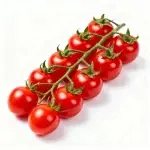


Yellow Cherry Tomato
Details & Complete Planting Guide
Ⅰ. Product Details
Variety Characteristics
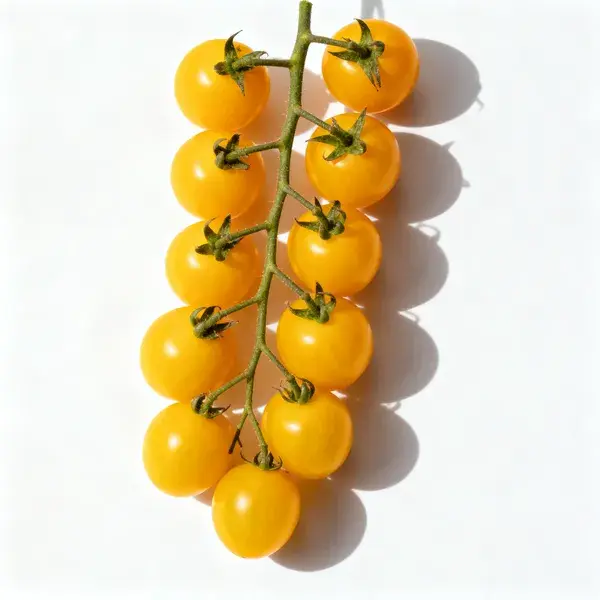
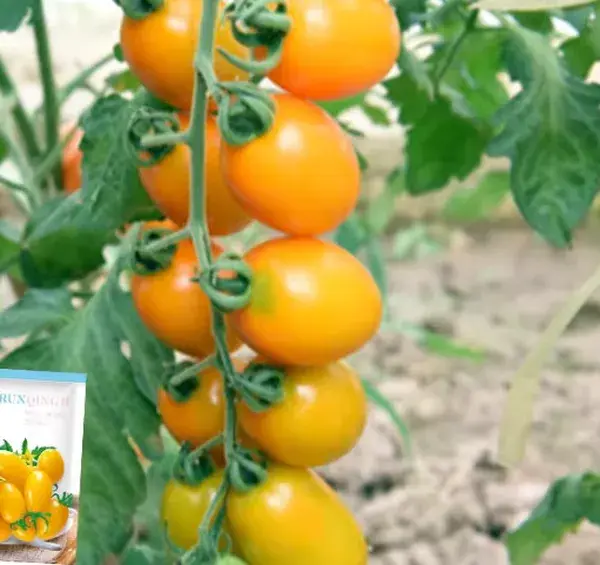
Yellow Cherry Tomato is a small-fruited tomato variety of the Solanaceae family with an indeterminate growth habit and a growth cycle of 120-150 days. The plant is a climbing vine reaching 2-3m in height, producing small fruits of 15-25g in weight with bright yellow skin and flesh, oval shape and sweet taste with low acidity. It has strong heat resistance and continuous fruiting ability, suitable for open field and protected cultivation.
Quality Advantages
- Fruits are sweet and juicy with high sugar content (8-10%), rich in lycopene, β-carotene, vitamin C, vitamin E and antioxidants, with functions of enhancing immunity and anti-aging.
- Unique color and shape: Bright yellow fruits are beautiful and attractive, suitable for fresh eating, salad, garnish and snack, with high commercial value.
- Long fruiting period: Continuous fruiting for 3-4 months, high yield and good economic benefits.
High-Yield Characteristics
Under proper cultivation management, the yield per mu can reach 3000-5000kg. Each plant can produce 300-500 fruits, with strong disease resistance to tomato mosaic virus and early blight, and is suitable for long-season cultivation in greenhouses.
Anwendungsszenarien
- Fresh food market: Sold as a high-grade fruit tomato, popular in supermarkets, fruit stores and high-end restaurants;
- Catering industry: Used for salad, fruit platter, western food decoration and juice making;
- Processing industry: Suitable for making canned cherry tomatoes, dried tomatoes and tomato sauce;
- Urban agriculture: Suitable for balcony and courtyard planting, as both edible and ornamental plants.
Selection & Storage Suggestions
- Selection skills: Choose fruits with bright yellow color, plump shape, smooth skin, no cracks, no spots and fresh calyx;
- Storage method:
- Short-term storage: Store at room temperature for 2-3 days, or in refrigerator crisper for 5-7 days;
- Long-term storage: Can be frozen or made into dried tomatoes;
- For processing, process within 24 hours after harvest to maintain taste and nutrition.
Ⅱ. Planting Methods
Planting Preparation
1. Soil Selection
Yellow Cherry Tomato prefers fertile, loose, well-drained sandy loam or loam with pH value of 6.0-7.0. The soil should be rich in organic matter, deep plow 25-30cm before planting, apply base fertilizer: 3000-4000kg of decomposed organic fertilizer, 50kg of compound fertilizer and 20kg of potassium sulfate per mu. Mix evenly and make ridges with width of 1-1.2m and height of 20-30cm.
2. Seed Treatment
- Seed selection: Choose full, plump seeds with high germination rate, with seed consumption of 10-15g per mu;
- Seed disinfection: Soak seeds in 55℃ warm water for 15 minutes (stir continuously), then soak in 1% potassium permanganate solution for 10 minutes, rinse with clean water;
- Germination acceleration: Soak disinfected seeds in 25-30℃ water for 6-8 hours, wrap with wet gauze and germinate at 25-30℃, sow when seeds show white buds (about 2-3 days).
Seedling Raising & Transplanting
1. Seedling Raising Time
- Spring cultivation: Seedling raising in late February to early March, transplanting in late April to early May;
- Autumn cultivation: Seedling raising in mid-July to early August, transplanting in late August to early September;
- Greenhouse cultivation: Can be raised seedlings in winter and transplanted in early spring.
2. Seedling Raising Methods
Use 50-hole seedling trays filled with nutrient soil (peat soil: vermiculite: perlite = 3:1:1). Sow 1 seed per hole, cover with 0.5-1cm fine soil, water thoroughly and keep temperature at 25-30℃. After emergence, control temperature at 20-25℃ during the day and 15-18℃ at night, and harden seedlings 7-10 days before transplanting.
3. Transplanting Requirements
Transplant when seedlings have 4-6 true leaves and a height of 15-20cm (about 30-40 days after sowing). The planting density is 30cm × 60cm, with 3000-3500 plants per mu. Water thoroughly after transplanting and cover with mulch to keep warm and retain moisture.
Field Management
1. Wasserwirtschaft
- Seedling recovery period: Keep soil moist to promote root development;
- Vegetative growth period: Control watering properly to prevent excessive growth;
- Flowering and fruiting period: Ensure adequate water supply, water once every 7-10 days, keep soil moisture stable to improve fruit setting rate;
- Fruit ripening period: Reduce watering appropriately to improve fruit sugar content and quality.
2. Fertilizer Management
- Seedling fertilizer: Apply 10kg of urea per mu 10 days after transplanting to promote seedling growth;
- Flowering fertilizer: Apply 15kg of phosphorus and potassium fertilizer per mu at initial flowering stage;
- Fruiting fertilizer: Apply 20-25kg of compound fertilizer + 15kg of potassium sulfate per mu after first fruit setting, and topdress once every 15-20 days;
- Foliar fertilizer: Spray 0.2% potassium dihydrogen phosphate + 0.1% borax solution during flowering and fruiting period for 2-3 times to improve fruit setting rate and quality.
3. Pruning & Training
- Single stem pruning: Keep only the main stem, remove all lateral buds (suckers) in time to ensure nutrient concentration;
- Double stem pruning: Keep the main stem and one strong lateral bud below the first inflorescence, suitable for high-yield cultivation;
- Staking and tying: Set up trellises or insert bamboo poles when plants grow to 30cm height, tie vines to supports with soft ropes, and prune lower leaves in time to improve ventilation;
- Topping: Pinch the top when plants grow to 2-2.5m height or set 8-10 inflorescences to promote fruit ripening.
4. Pollination & Fruit Thinning
- Artificial pollination: Shake inflorescences gently in the morning (9-10 am) during flowering period to improve fruit setting rate, or use bee pollination;
- Fruit thinning: Remove malformed fruits and small fruits, keep 20-30 fruits per inflorescence to ensure uniform fruit size and good quality.
5. Disease & Pest Control
- Tomato mosaic virus and cucumber mosaic virus: Use virus-free seeds, control aphids, spray 20% virus A wettable powder 500x solution;
- Early blight and late blight: Use 75% chlorothalonil wettable powder 600x solution or 58% metalaxyl manganese zinc wettable powder 500x solution for spray control;
- Leaf mold and powdery mildew: Spray with 50% carbendazim wettable powder 800x solution or 25% triadimefon wettable powder 1000x solution;
- Aphids and whiteflies: Control with 10% imidacloprid wettable powder 1500x solution or yellow sticky traps;
- Tomato borer and armyworm: Use 2.5% deltamethrin emulsifiable concentrate 2000x solution or Bt emulsion 500x solution for spray control.
Harvesting
- Harvest time: Harvest when fruits turn bright yellow, fully colored and slightly soft (about 45-60 days after flowering), harvest in the morning;
- Harvesting method: Pick fruits with calyx by hand, handle carefully to avoid damaging fruits, harvest once every 2-3 days;
- Post-harvest treatment:
- Fresh sale: Sort fruits by size, remove damaged ones, pack in plastic boxes or foam boxes;
- Processing: Process into juice, sauce or dried tomatoes;
- Storage: Store at 8-10℃ for 7-10 days, or at room temperature for 2-3 days.






Bewertungen
Es sind noch keine Bewertungen vorhanden.