Pink Heart Blue Bird Succulent - Product Details & Care Guide
Pink Heart Blue Bird Succulent (Echeveria 'Blue Bird')
Pink-Blue Fairy Appearance + Rosette Cuteness, An Easy-Care Healing Green Plant For Beginners
Detalles del producto
Características principales
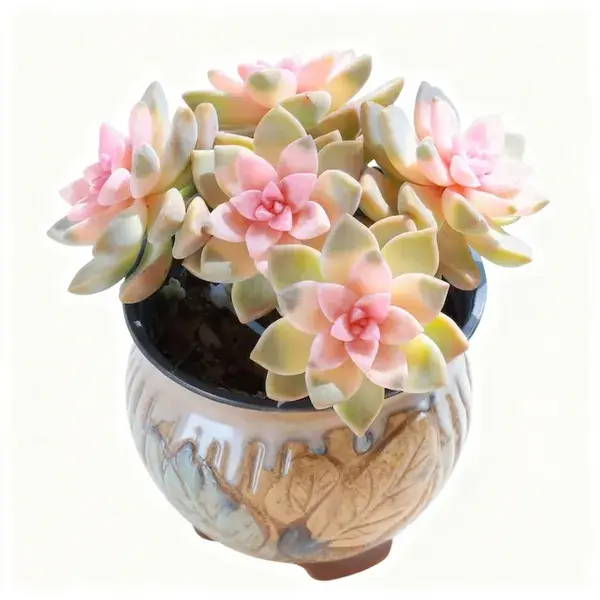
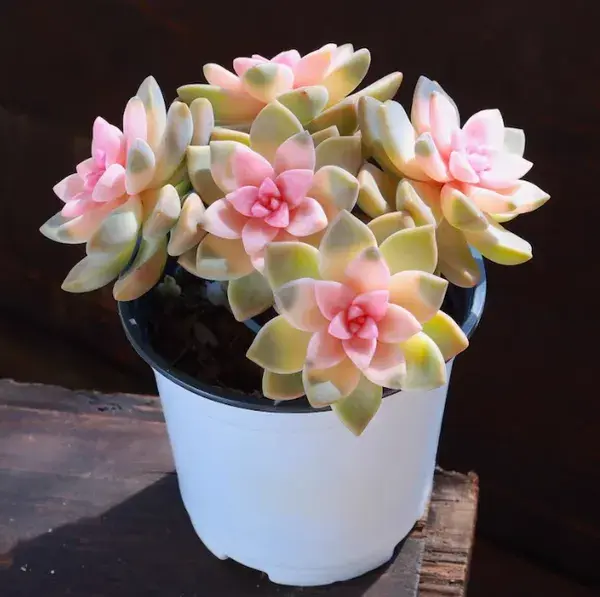
A succulent plant of the Crassulaceae family, popular in the succulent community for its "fairy-like appearance". Leaves are arranged in a standard rosette shape, thick and plump, with a transparent pink-blue base color.
Under sufficient light, leaf edges are dyed with a pink blush, leaf tips curl slightly upward, and the surface is covered with a thin layer of farina, feeling smooth and warm – like having a "soft light filter", combining freshness and romance.
Not only has an outstanding appearance, but also is "beginner-friendly" – drought-tolerant, waterlogging-intolerant, strong adaptability, low maintenance requirements, and grows steadily without frequent care.
Thick leaves have strong water storage capacity, can absorb tiny dust particles in the air and regulate local humidity, suitable for long-term indoor placement. Symbolizes "fresh healing, romantic beauty, and peaceful years".
It can decorate spaces to add fairy spirit and relieve stress – a "appearance leader" for desks and balconies, and a romantic choice for gifting relatives and friends.
Escenarios de aplicación
Maceta de escritorio: Medium and small pink heart blue birds placed on desks or office tables – pink-blue leaves relieve eye strain, and the fresh appearance heals work and study pressure without taking up space.
Pantalla de salón: Medium and large rosette plants with simple ceramic pots placed on living room coffee tables or windowsills – the rosette shape is stretched and elegant, improving the romantic and fresh style of the space.
Balcón Paisajismo: Combined with other Crassulaceae succulents in arrangements or placed alone on balcony shelves – pink edges become more vivid under sufficient light, forming a color sense of hierarchy with other green plants.
Regalar: Packaged as gifts for girlfriends, lovers, and literary youth – the pink-blue fairy appearance paired with romantic meanings conveys "fresh companionship and good wishes", both attractive and heartfelt.
Pantalla interior: Placed in entrances or bedroom bay windows – the rosette-shaped leaves do not block light, and the farina texture has a sense of luxury, injecting a gentle and healing atmosphere into the home space.
Especificaciones
Altura de la planta: 8cm / 15cm / 22cm / 30cm (including rosette height, leaf stretched state)
Tamaño del toldo: 10cm / 18cm / 25cm / 32cm (single rosette or 3-4 heads clumping optional)
Material de la maceta: Terracotta Breathable Pot / Rough Ceramic Pot / Simple White Ceramic Pot (optional, with drainage holes)
Estado de crecimiento: Compact rosette, plump non-wilted leaves, intact farina without damage, pest-free, with original soil clod
Rasgos varietales: Growing season in spring and autumn, semi-dormant in summer, moderate cold tolerance (can withstand 5-8℃ low temperature), farina on leaves is easy to fall off, requiring gentle care
Guía de cuidados y cultivo
1Pot & Soil: Ventilation & Drainage to Protect Fairy Appearance
Prioritize terracotta or rough ceramic pots with drainage holes, 1-2cm smaller in diameter than the rosette canopy – avoid oversized pots to prevent root rot from waterlogging.
The rosette of pink heart blue bird is relatively stretched; the pot height should be able to accommodate the roots without blocking the leaves.
Soil formula: Granular soil (akadama + maifan stone + lava rock) + nutrient soil = 6:4, or use Echeveria-specific soil directly, mixed with a small amount of slow-release fertilizer (buried at the bottom, away from roots). Ensure soil is loose, breathable, and non-compacted for drainage and protection of fragile roots.
2Light Requirements: Sufficient Light for Pink-Edged Fairy State
Need sufficient light in spring, autumn, and winter – 4-6 hours of direct sunlight daily (south-facing balcony/windowsill is best). The more sufficient the light, the more transparent the pink-blue leaves, the more obvious the pink leaf edges, and the more compact the rosette.
Summer shade: Provide 50% shade when temperature exceeds 32℃ (use sunshade net or move to scattered light area) to avoid leaf scorching, yellowing, and rotting, and prevent farina from falling off to affect appearance.
Insufficient light causes elongated leaves, faded pink-blue color, and loose rosette – supplement light in time with succulent grow lights (4-5 hours daily) to restore compact fairy state.
3Watering Principles: Better Dry Than Wet, Care for Farina
Seguir estrictamente "Regar sólo cuando esté seco, regar a fondo al regar" – water only when soil is completely dry (test with a toothpick: no moisture when pulled out) or the bottom leaves of the rosette are slightly wilted.
Avoid frequent watering to prevent root rot, and avoid splashing water on leaves (prevent farina from falling off and leaf rot).
Spring & Autumn: Water every 10-15 days during the growing season, pour slowly along the pot edge for full soil absorption, and ventilate in time after watering to avoid water accumulation in the pot.
Riego en verano: Reduzca el riego durante el periodo de semi-dormancia - riegue con "agua de supervivencia" cada 20-30 días (una pequeña cantidad a lo largo del borde de la maceta para mantener la tierra ligeramente húmeda) para evitar la podredumbre negra provocada por las altas temperaturas y la humedad.
Riego en invierno: Controle el agua cuando la temperatura sea inferior a 5℃ - riegue cada 30-40 días o deje de regar por completo, mantenga el suelo seco para evitar la congelación de las raíces.
4Temperature Adaptation: Optimal 15-28℃ for Steady Fairy Growth
Optimal growth temperature: 15-28℃ – leaves are plump, color is bright, rosette shape is stretched, and growth state is the best.
Winter protection: Move indoors to a warm place when temperature is below 5℃, away from cold drafts, maintain temperature ≥5℃ to avoid leaf and root freezing.
Summer cooling: Move to a well-ventilated shaded area when temperature exceeds 35℃, enhance air circulation (use a small fan if needed) to avoid leaf rot and black rot from stuffiness.
5Fertilization: Thin Fertilizer Applied Frequently for Fairy Appearance Upgrade
Abone sólo en primavera y otoño, y deje de hacerlo en verano e invierno para evitar que se queme el abono.
Fertilizer selection: Use succulent-specific slow-release fertilizer (buried once during growing season, valid for 3-6 months) or diluted succulent liquid fertilizer (1/4 of the recommended concentration). Avoid high nitrogen fertilizer (prone to leaf elongation and greening).
Fertilization frequency: Apply liquid fertilizer once a month along the pot edge, avoiding direct contact with roots and leaves. Supplement slow-release fertilizer every 3 months, adjust dosage according to plant size (about 1 gram).
6Pruning & Shaping: Maintain Rosette Fairy State
Prune best in spring and autumn growing seasons – promptly trim dry bottom leaves and weak leaves to avoid nutrient consumption and maintain rosette ventilation and light transmission.
Shaping method: For a compact rosette, ensure sufficient light + water control to avoid elongation. If side buds appear, they can be retained to form a clumping plant shape, or removed in time to concentrate nutrients on the main rosette for a fuller main plant.
Leaf care: The farina on leaves is a "appearance protective film" – avoid frequent touching or splashing water. If there is dust, gently brush it off with a soft brush, do not rinse with water.
7Repotting & Propagation: Fairy State Passed Down
Repot every 1-2 years, best in spring (March-April). Gently remove the plant from the pot, shake off some old soil, trim rotten and dry roots, and air-dry for 1-2 days before repotting to avoid damaging leaves and farina.
Propagation method: Leaf cuttings or division are suitable in spring and autumn. Leaf cuttings: Select healthy and plump leaves, gently break them off, air-dry the cut for 2-3 days, lay them flat on moist granular soil, maintain temperature at 20-25℃, and roots and buds will form in 2-4 weeks. Division: Separate the side buds of clumping plants with a small amount of roots and repot directly – survival rate is extremely high.
8Pest & Disease Control: Protect Fairy Appearance
Enfermedades comunes: Black rot and leaf spot (mostly caused by waterlogging and poor ventilation). At the initial stage, remove the plant from the pot, cut off rotten parts, disinfect the cut with carbendazim solution, repot with new soil, and strengthen ventilation and water control later.
Plagas comunes: Scale insects and spider mites. For scale insects, gently wipe leaves with alcohol-soaked cotton (avoid farina). For spider mites, spray succulent-specific insecticide once a week for 2-3 consecutive weeks, ensuring full coverage of leaf surfaces and undersides, and ventilate in time after spraying.
Reseñas
Aún no hay opiniones.
Sé el primero en opinar “Pink-Hearted Bluebird Succulent, 13-15cm (without pot)” Cancelar la respuesta
MAECENAS IACULIS
Vestibulum curae torquent diam commodo parturient penatibus nunc dui adipiscing convallis bulum parturient suspendisse parturient a.Parturient in parturient scelerisque nibh lectus quam a natoque adipiscing a vestibulum hendrerit et pharetra fames nunc natoque dui.
ADIPISCING CONVALLIS BULUM
Vestibulum penatibus nunc dui adipiscing convallis bulum parturient suspendisse.
Abitur parturient praesent lectus quam a natoque adipiscing a vestibulum hendre.
Scelerisque adipiscing bibendum sem vestibulum et in a a purus lectus faucibus lobortis tincidunt purus lectus nisl class eros.Condimentum a et ullamcorper dictumst mus et tristique elementum nam inceptos hac parturient scelerisque vestibulum amet elit ut volutpat.












Reseñas
Aún no hay opiniones.