


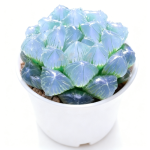


Lithops (Living Stone): Complete Care Guide & Growing Tips for Beginners
🌵 Basic Information
Core Positioning
Lithops, commonly known as “Living Stones” or “Pebble Plants,” are a genus of succulents in the Aizoaceae family. Renowned as “masters of camouflage” in the succulent world, their fleshy leaves closely mimic rock formations—helping them avoid predators and reduce water loss. They are ideal for beginner gardeners, offering unique ornamental value and a rewarding growing experience.
Key Details
| Family/Genus | Aizoaceae, Lithops |
| 起源 | Arid regions of South Africa and Namibia |
| Morphology | Small, stemless succulents with paired, fused fleshy leaves forming a cone shape. Leaf surfaces have patterns in white, gray, brown, or green (resembling pebbles). Blooms in autumn with yellow or pink flowers (1-2 weeks flowering period). |
| Growth Habits | Prefers warm, dry, and sunny environments; drought-tolerant but not waterlogging-resistant; semi-shade tolerant; avoids extreme cold and heat. Slow-growing, molts once a year. |
| Lifespan | Perennial succulent, lifespan up to 10+ years. Mature plants reach 3-5cm in diameter. |
Ornamental Value
- Unique Appearance: Rock-mimicking shape is highly distinctive—perfect for succulent arrangements or rock gardens.
- Blooming Surprise: Small flowers bloom from the center of “rock-like” leaves in autumn, creating a charming contrast.
- Low-Maintenance: Highly drought-tolerant, requiring minimal care. Suitable for balconies, windowsills, or office desks.
🌱 Beginner-Friendly Growing Guide (6 Fail-Proof Steps)
1. Pot & Soil: Drainage is Key
- Pot Selection: Choose shallow pots with drainage holes (height ≤10cm). Pot diameter depends on plant quantity: 5-8cm for single plants, 3cm spacing between multiple plants. Terra cotta or purple clay pots are preferred (excellent breathability).
-
Soil Mix (Beginner-Friendly Formula):
- 70% Granular Soil (Akadama + Perlite + Lava Rock) + 20% Succulent Potting Soil + 10% River Sand
- Simplified Version: 80% Succulent Granular Soil + 20% Peat Moss (sieve to remove dust)
- Pot Bottom Layer: Add 1-2cm of ceramsite to the bottom for enhanced drainage, preventing waterlogging and root rot.
2. Sowing/Repotting: Gentle Operation to Avoid Damage
Sowing (For Beginners Wanting Full Growth Cycle Experience)
- Best Time: Spring or Autumn (15-25℃, highest germination rate)
-
Steps:
- Fill the pot with soil, gently compact, and water thoroughly (use a spray bottle to avoid soil erosion).
- Evenly sprinkle tiny lithops seeds on the soil surface—no need to cover (or add a thin layer of fine sand).
- Cover with plastic wrap (pierce small holes for ventilation) and place in scattered light, keeping soil slightly moist.
- Germination occurs in 7-10 days. Gradually remove the plastic wrap after germination, and move to a sunny spot after 1 month.
Repotting Seedlings (Beginner’s Top Choice)
- Best Time: Spring or Autumn (avoid extreme summer heat and winter cold)
-
Steps:
- Gently remove seedlings from their original pot—avoid breaking fleshy leaves.
- Add a layer of soil to the new pot, place the seedling, and fill around the roots with soil (press lightly). The top of the plant should be level with the soil surface—do not bury deeply.
- Do not water for 3-5 days after repotting. Place in scattered light to acclimate before normal care.
3. Light & Temperature: Mimic Native Environment
-
光の条件:
- Spring/Autumn (Growth Period): 4-6 hours of direct sunlight daily (south-facing balcony is best). Insufficient light causes etiolation (leggy growth), pale color, and blurred patterns.
- Summer: Avoid midday intense light (11 AM-4 PM). Place in scattered light to prevent leaf burn.
- Winter: Place in the sunniest spot (e.g., windowsill). Use grow lights if light is insufficient.
-
Temperature Requirements:
- Optimal Growth Temperature: 15-28℃
- Winter: Protect from frost when temperature drops below 5℃ (move indoors).
- Summer: Ventilate to cool down when temperature exceeds 32℃ (open windows or use a small fan). High temperature + high humidity = root rot risk.
4. Watering & Fertilizing: Better Dry Than Wet
-
Watering Principle: “Only water when soil is completely dry; water thoroughly when you do” (Critical! 90% of lithops root rot is caused by overwatering).
- Spring/Autumn (Growth Period): Water when soil is dry 2cm deep (check with finger). Frequency: 10-15 days (adjust based on humidity).
- Summer (Semi-Dormant): Reduce watering. Water sparingly along the pot edge when soil is dry (avoid getting water in leaf gaps). Frequency: 20-30 days.
- Winter (Dormant): Almost no water needed when temperature below 10℃—keep soil dry.
- Molting Period (March-May): Stop watering completely until old leaves dry up and new leaves emerge.
-
Fertilizing: Minimal fertilization required—apply dilute fertilizer once in spring and once in autumn.
- Fertilizer Choice: Succulent slow-release fertilizer (bury near pot edge, away from roots) or liquid fertilizer diluted 1000x.
- Taboo: Do not fertilize in summer, winter, or during molting—risk of fertilizer burn.
5. Repotting & Division: Adjust Based on Growth
-
Repotting:
- Frequency: Once every 1-2 years (spring/autumn). Repot when soil compacts or plants become overcrowded.
- Steps: Remove plant from pot, clean old soil from roots, trim dry roots, repot with fresh soil. Do not water for 3-5 days after repotting.
-
Division:
- Lithops grow slowly—offsets (side shoots) form after 3-5 years, creating clumps.
- Best Time: Spring/autumn. Separate offsets (≥1cm diameter) from the mother plant and repot individually (let cut wounds dry for 3 days before repotting).
6. Pest & Disease Control: Prevention First
-
Common Diseases: Root Rot (caused by overwatering/poor drainage)
- Prevention: Strictly control watering, ensure soil drainage, and ventilate regularly.
- Treatment: If plant softens or leaves turn yellow, remove from pot immediately. Cut off rotten roots, disinfect wounds with carbendazim, and repot with fresh soil after drying.
-
Common Pests: Mealybugs, Root Mealybugs (hide in leaf gaps/roots)
- Prevention: Mix a small amount of insecticide (e.g., imidacloprid) into soil; inspect plants regularly.
- Treatment: Wipe leaves with alcohol-soaked cotton for mealybugs; for root mealybugs, remove from pot, clean roots, disinfect, and repot with fresh soil.
📅 Key Growth Cycle Stages (Beginner Must-Know)
Molting Period (March-May)
Old leaves gradually dry as new leaves grow internally. Stop watering completely—otherwise, old leaves won’t shed, and new leaves may become deformed.
Growth Period (June-September, October-November)
After molting, plants enter active growth. Ensure adequate light and water.
Blooming Period (September-October)
Mature plants (2+ years old) bloom from the center of leaves. Water normally during flowering; trim flower stems after blooming.
Dormant Period (December-February)
Growth stops. Keep in a dry, cool environment—avoid disturbance.
⚠️ Beginner’s Mistake Prevention Guide
- Do not overwater: Lithops are extremely drought-tolerant—overwatering is more fatal than underwatering.
- Do not bury plants deeply: Keep the top of the plant level with soil—deep burial causes leaf rot.
- Do not skimp on light: Long-term low light causes etiolation (leggy growth), losing the “stone” shape.
- Do not water during molting: Forced watering leads to old leaf rot and affects new leaf growth.
- Do not use heavy soil: Avoid regular garden soil or high peat moss ratios—use granular soil as the main component for breathability.
The charm of lithops lies in their “slow growth and clever camouflage.” For beginners, mastering three core principles—well-draining soil, sparse watering, and adequate light—is enough to keep them thriving. Watching them grow from tiny “stones” to clumps and bloom is incredibly rewarding!






レビュー
まだレビューはない。.