
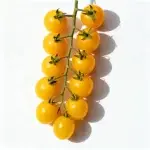
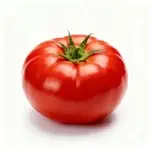


Red Cherry Tomato
Details & Complete Planting Guide
Ⅰ. Product Details
Variety Characteristics
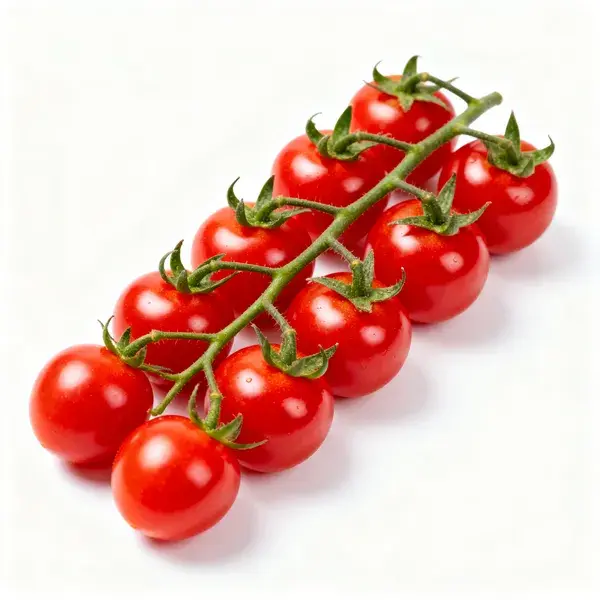
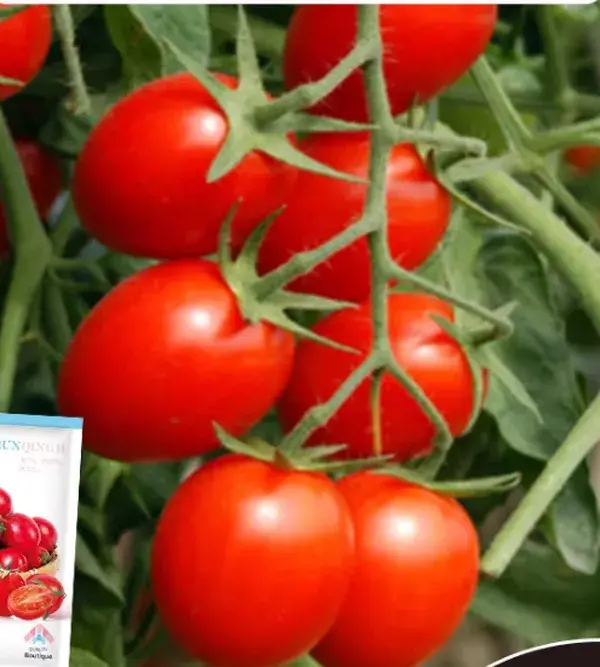
Red Cherry Tomato is a small-fruited tomato variety of the Solanaceae family with an indeterminate growth habit and a growth cycle of 120-150 days. The plant is a climbing vine reaching 2-3m in height, producing small fruits of 15-25g in weight with bright red skin and flesh, oval shape and sweet-sour taste with rich flavor. It has strong adaptability, heat and drought resistance, suitable for open field, greenhouse and balcony cultivation.
Quality Advantages
- Fruits are rich in lycopene (up to 8-10mg/100g), vitamin C, vitamin E, antioxidants and dietary fiber, with functions of anti-oxidation, protecting cardiovascular and enhancing immunity.
- Excellent taste: Sweet with moderate acidity, juicy and flavorful, suitable for fresh eating, salad, juice making and cooking, with high nutritional and commercial value.
- Continuous fruiting: Long harvest period of 3-4 months, high yield and good economic benefits, suitable for commercial production and family planting.
High-Yield Characteristics
Under proper cultivation management, the yield per mu can reach 3000-5000kg. Each plant can produce 300-500 fruits, with strong disease resistance to tomato mosaic virus, early blight and late blight, and is suitable for long-season cultivation in protected areas.
Escenarios de aplicación
- Fresh market: Sold as high-grade fruit tomato in supermarkets, fruit stores and farmers’ markets, popular among consumers;
- Catering industry: Used for salad, western food decoration, fruit platters and juice making;
- Processing industry: Suitable for making canned cherry tomatoes, dried tomatoes, tomato sauce and tomato paste;
- Urban agriculture: Ideal for balcony and courtyard planting, as both edible and ornamental plants, suitable for family gardening and children’s planting education.
Selection & Storage Suggestions
- Selection skills: Choose fruits with bright red color, plump shape, smooth skin, no cracks, no spots and fresh calyx, avoid soft or overripe fruits;
- Storage method:
- Short-term storage: Store at room temperature for 2-3 days, or in refrigerator crisper (8-10℃) for 5-7 days;
- Long-term storage: Can be frozen, dried or made into preserves;
- For best taste, eat fresh within 3 days after harvest.
Ⅱ. Planting Methods
Planting Preparation
1. Soil Selection
Red Cherry Tomato prefers fertile, loose, well-drained sandy loam or loam with pH value of 6.0-7.0. The soil should be rich in organic matter, avoid continuous cropping with solanaceous crops. Deep plow the land 25-30cm before planting, apply base fertilizer: 3000-4000kg of decomposed organic fertilizer, 50kg of compound fertilizer (N:P:K=15:15:15) and 20kg of potassium sulfate per mu. Mix evenly and make ridges with width of 1-1.2m and height of 20-30cm.
2. Seed Treatment
- Seed selection: Choose full, plump seeds with high germination rate (≥90%), with seed consumption of 10-15g per mu;
- Seed disinfection: Soak seeds in 55℃ warm water for 15 minutes (stir continuously), then soak in 1% potassium permanganate solution for 10 minutes, rinse with clean water;
- Germination acceleration: Soak disinfected seeds in 25-30℃ water for 6-8 hours, wrap with wet gauze and germinate at 25-30℃, sow when seeds show white buds (about 2-3 days).
Seedling Raising & Transplanting
1. Seedling Raising Time
- Spring cultivation: Seedling raising in late February to early March, transplanting in late April to early May (when soil temperature ≥15℃);
- Autumn cultivation: Seedling raising in mid-July to early August, transplanting in late August to early September;
- Greenhouse cultivation: Can be raised seedlings in winter (November-December) and transplanted in early spring.
2. Seedling Raising Methods
Use 50-hole seedling trays filled with nutrient soil (peat soil: vermiculite: perlite = 3:1:1). Sow 1 seed per hole, cover with 0.5-1cm fine soil, water thoroughly and cover with plastic film to keep warm. After emergence (about 5-7 days), remove the film and control temperature at 20-25℃ during the day and 15-18℃ at night. Harden seedlings 7-10 days before transplanting by reducing temperature and water.
3. Transplanting Requirements
Transplant when seedlings have 4-6 true leaves, strong stems and developed root system (about 30-40 days after sowing). The planting density is 30cm × 60cm, with 3000-3500 plants per mu. Plant in the afternoon on cloudy days, water thoroughly after transplanting and cover with mulch to keep warm and retain moisture.
Field Management
1. Water Management
- Seedling recovery period: Keep soil moist to promote root development, water once every 3-5 days;
- Vegetative growth period: Control watering properly to prevent excessive growth, water in time when soil is dry;
- Flowering and fruiting period: Ensure adequate water supply, water once every 7-10 days, keep soil moisture at 60-80%, avoid drought and waterlogging;
- Fruit ripening period: Reduce watering appropriately to improve fruit sugar content and quality.
2. Fertilizer Management
- Seedling fertilizer: Apply 10kg of urea per mu 10 days after transplanting to promote seedling growth;
- Flowering fertilizer: Apply 15kg of phosphorus and potassium fertilizer per mu at initial flowering stage to promote flower formation;
- Fruiting fertilizer: Apply 20-25kg of compound fertilizer + 15kg of potassium sulfate per mu after first fruit setting, topdress once every 15-20 days;
- Foliar fertilizer: Spray 0.2% potassium dihydrogen phosphate + 0.1% borax solution during flowering and fruiting period for 2-3 times to improve fruit setting rate and quality.
3. Pruning & Training
- Single stem pruning: Keep only the main stem, remove all lateral buds (suckers) when they are 2-3cm long to ensure nutrient concentration;
- Double stem pruning: Keep the main stem and one strong lateral bud below the first inflorescence, suitable for high-yield cultivation;
- Staking and tying: Set up trellises (height 2.5-3m) or insert bamboo poles when plants grow to 30cm height, tie vines to supports with soft ropes, and prune lower old leaves in time;
- Topping: Pinch the top when plants grow to 2-2.5m height or set 8-10 inflorescences to promote fruit ripening.
4. Pollination & Fruit Thinning
- Artificial pollination: Shake inflorescences gently in the morning (9-10 am) during flowering period to improve fruit setting rate, or use bee pollination (2-3 boxes per mu);
- Fruit thinning: Remove malformed fruits, small fruits and diseased fruits, keep 20-30 fruits per inflorescence to ensure uniform fruit size and good quality.
5. Disease & Pest Control
- Tomato mosaic virus: Use virus-free seeds, control aphids, spray 20% virus A wettable powder 500x solution;
- Early blight and late blight: Use 75% chlorothalonil wettable powder 600x solution or 58% metalaxyl manganese zinc wettable powder 500x solution for spray control;
- Leaf mold: Spray with 50% carbendazim wettable powder 800x solution;
- Aphids and whiteflies: Control with 10% imidacloprid wettable powder 1500x solution or yellow sticky traps;
- Tomato borer: Use 2.5% deltamethrin emulsifiable concentrate 2000x solution or Bt emulsion 500x solution for spray control.
Harvesting
- Harvest time: Harvest when fruits turn bright red, fully colored and slightly soft (about 45-60 days after flowering), harvest in the morning when temperature is low;
- Harvesting method: Pick fruits with calyx by hand, handle carefully to avoid damaging fruits, harvest once every 2-3 days;
- Post-harvest treatment:
- Fresh sale: Sort fruits by size, remove damaged ones, pack in plastic boxes or foam boxes with absorbent paper;
- Processing: Process into juice, sauce, dried tomatoes or canned products;
- Storage: Store at 8-10℃ for 7-10 days, or at room temperature for 2-3 days.




Reseñas
Aún no hay opiniones.