


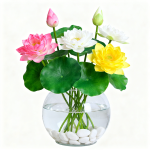
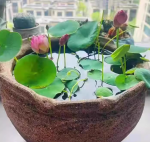
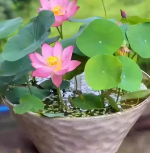
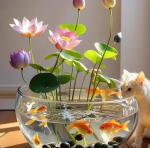


Four-Season Bowl Lotus (Nelumbo nucifera)
Details & Complete Growing Guide (Rhizome & Seed Planting)
工場概要
1.1 工場紹介
Four-Season Bowl Lotus, scientifically known as Nelumbo nucifera, also called Potted Lotus or Basin Lotus, is a dwarf variety of perennial aquatic herb belonging to the Nelumbonaceae family. Developed through artificial selection and improvement of traditional lotus, it gets its name from its compact size that allows planting in bowl-shaped containers. The term “Four-Season” does not mean it blooms year-round, but rather that its flowering period is longer than traditional lotus (natural flowering period: June-September; can be extended to May-October under artificial regulation) with stronger adaptability, making it suitable for small-space cultivation such as home balconies and windowsills. With its “pure beauty emerging from mud,” elegant flower shape, and faint fragrance, Four-Season Bowl Lotus has become a highly ornamental flower with oriental charm, symbolizing “purity, elegance, and auspiciousness.”
1.2 形態学的特徴
- Compact Plant Type: Usually 20-40 cm tall, with some miniature varieties only around 15 cm. Stems (rhizomes) are short and sturdy, 0.5-1 cm in diameter, suitable for planting in containers 15-30 cm in diameter and 10-20 cm deep, no need for large ponds.
- Unique Leaves: Two types of leaves—floating leaves and emergent leaves. Floating leaves float on the water surface, round or oval-shaped, 5-10 cm in diameter, dark green and glossy with slender hollow petioles covered in small thorns. Emergent leaves stand above the water, larger (8-15 cm in diameter) with sturdy petioles that can support leaves 5-15 cm above the water, creating a layered aesthetic.
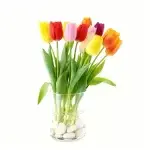
- Elegant Flowers: Solitary flowers bloom at the top of flower stalks, standing above the water or slightly higher than emergent leaves. Flower diameter ranges from 5-12 cm, with flower forms including single-petaled, double-petaled, and semi-double-petaled. Rich in colors—common colors are red, pink, white, yellow, and variegated. Petals are soft with wavy or serrated edges, resembling graceful young ladies in full bloom, highly ornamental.
- Rhizome Traits: Rhizomes are short cylindrical with short internodes, 3-5 cm long and 1-2 cm in diameter per segment, covered in brown scales with buds (commonly known as “rhizome buds”) underneath. Plump buds are white or pale pink, the main reproductive organ. Some varieties produce seeds (lotus seeds) which are oval, hard and black, usable for sowing propagation but with slower growth rate.
- Well-Developed Roots: Fibrous adventitious roots grow from rhizome nodes, white and slender, mainly functioning to absorb water and nutrients, taking root in the mud at the bottom of the container to stabilize the plant.
1.3 成長習慣
- Temperature Preference: Thrives in warm and humid climates, intolerant of cold. Optimal growth temperature is 20-30°C (68-86°F), with water temperature 18-25°C (64-77°F) being ideal. Rhizomes begin to germinate when temperature stabilizes above 15°C (59°F); growth stagnates below 10°C (50°F); rhizomes are prone to freezing damage and rot below 5°C (41°F). Flowering period prefers 25-30°C (77-86°F), with more abundant blooms in high-temperature and high-humidity environments.
- 光条件: A typical sun-loving flower, requiring over 6-8 hours of direct sunlight daily. Insufficient light leads to leggy growth, sparse emergent leaves, few or no flowers. Even in high summer temperatures, no shading is needed—adequate light promotes photosynthesis, resulting in larger and more colorful flowers.
- 水が必要だ: An aquatic plant that cannot survive without water, but water requirements vary by growth stage. Shallow water (3-5 cm) is suitable for germination to increase water temperature and promote sprouting; water depth can be increased to 5-10 cm during the emergent leaf stage, keeping water clean; stable water depth of 8-12 cm during flowering period, avoiding sudden water level changes that affect blooming. Drought-intolerant—even short-term water shortage causes leaf wilting.
- 土壌のニーズ: Prefers humus-rich pond mud, river mud, or special bowl lotus soil. Soil should be loose, fertile, and have good water and fertilizer retention capacity, with pH 6.5-7.5 (slightly acidic to neutral). Avoid ordinary garden soil or heavy clay—garden soil lacks fertility, while heavy clay is prone to compaction leading to root hypoxia.
- Growth Cycle: Approximately 60-90 days from rhizome planting to flowering, 120-150 days from seed planting. Natural growth cycle: sprouting in spring (April-May), full blooming in summer (June-August), gradual leaf wilting in autumn (September-October), rhizome dormancy in winter (November-March next year).
1.4 観賞価値と実用価値
- Home Decoration: Compact size makes it suitable for small spaces such as balconies, windowsills, desks, and coffee tables. Containers can be ceramic bowls, purple sand pots, or glass tanks. It not only showcases the elegant green leaves but also the graceful flowers, emitting a faint fragrance that adds natural vitality and oriental charm to indoor spaces.
- Garden Decoration: Can be planted in groups in small ponds, stone troughs, or shallow pots in courtyards, or combined with other aquatic plants (such as pennywort, water hyacinth) to create micro water features, becoming a highlight in the garden. During summer blooming, it forms a miniature landscape of “endless green leaves reaching the sky, and lotus flowers glowing red in the sun.”
- 贈り物をする With auspicious and elegant meanings, it is a unique gift choice for festivals or housewarmings. Equipped with exquisite containers and planting instructions, it is both practical and culturally connotative.
- Air Purification: As an aquatic plant, it absorbs carbon dioxide from the air and releases oxygen. It can also purify water quality by absorbing harmful substances in water, improving indoor air quality and micro-environment humidity.
- Cultural Significance: In traditional Chinese culture, lotus symbolizes purity, elegance, auspiciousness, and longevity. Although small, Four-Season Bowl Lotus carries the same cultural connotations, being a favorite ornamental flower among literati and scholars, often depicted in poetry and paintings.
Growing Guide (Rhizome & Seed Planting)
2.1 General Preparation
2.1.1 Container Selection
Container Requirements: Choose non-porous containers (bowl lotus requires long-term water storage; porous containers will leak water) with diameter 15-30 cm and depth 10-20 cm. Preferred materials are ceramic, purple sand, or plastic—ceramic and purple sand have good air permeability, conducive to rhizome growth; plastic containers are lightweight and durable, suitable for beginners. The bottom of the container should be flat to avoid uneven water levels due to tilting.
Size Matching: Miniature varieties (e.g., “Baby Lotus,” “Bowl Lotus”) use containers with diameter 15-20 cm and depth 10-15 cm; small varieties (e.g., “Pink Butterfly,” “Snow White”) use 20-25 cm diameter and 15-18 cm depth; medium varieties (e.g., “Sun-Red,” “Noble Consort”) use 25-30 cm diameter and 18-20 cm depth.
2.1.2 土壌の準備
Soil Selection: Prioritize natural pond mud or river mud—expose to sunlight for 3-5 days to sterilize and remove impurities and stones. If no natural mud is available, purchase special bowl lotus soil or prepare your own (formula: 5 parts leaf mold + 3 parts garden soil + 2 parts decomposed organic fertilizer, mix with water to form a paste, let stand for 2-3 days to settle).
Soil Treatment: Whether using natural mud or prepared soil, “awaken the soil” before use—put soil into the container, add an appropriate amount of water to make it a thin paste, place in a ventilated and sunny area for 3-5 days. Plant only after the soil settles into layers and the water becomes clear, avoiding turbid water that affects root respiration after planting.
2.1.3 Planting Time
Rhizome Planting: Best time is spring (April-May), when temperature stabilizes above 15°C (59°F) with high rhizome germination rate and fast growth, allowing flowering in summer. Southern regions can start as early as late March, while northern regions should delay until early May to avoid rhizome rot from low temperatures.
Seed Planting: Can be done in spring (March-April) or autumn (August-September). Spring planting blooms in the same year; autumn planting requires overwintering and blooms in summer next year. Seed planting has a longer cycle, suitable for patient beginners.
2.2 Rhizome Planting Method (Recommended: Fast Growth & Easy Flowering)
Rhizome Planting
2.2.1 Rhizome Selection & Treatment
Rhizome Selection: Choose healthy rhizomes that are short-jointed, plump, sturdy, undamaged, and mold-free. Each rhizome segment should have 2-3 complete nodes and at least 1 plump bud (white or pale pink, prominently raised). Rhizomes with a few fibrous roots at the tail are preferred, as they have strong germination ability.
Rhizome Treatment: Soak rhizomes in 50% carbendazim 500x solution or potassium permanganate 1000x solution for 10-15 minutes before planting to sterilize and prevent rot. Gently peel off withered scales from rhizomes to expose healthy buds, facilitating sprouting.
2.2.2 植え付けステップ
- Soil Preparation & Watering: Put prepared soil into the container to 1/2-2/3 of the container depth (about 5-10 cm thick), add an appropriate amount of water to make the soil a paste, with water level 2-3 cm above the soil surface. Let stand for 1-2 days until the water becomes slightly clear.
- Rhizome Placement: Place disinfected rhizomes obliquely into the soil at a 30° angle, with buds facing upward and the tail downward. Bury 1/2 of the rhizome in the soil and leave 1/2 exposed to avoid bud suffocation from deep burial. For multiple rhizomes, maintain 5-8 cm spacing with buds facing the same direction.
- Fixing & Compacting: Gently compact the soil around the rhizomes to prevent floating, taking care not to damage buds and fibrous roots with excessive force.
- Water Level Adjustment: After planting, add water to 3-5 cm above the soil surface. If the water is turbid, replace it 1-2 times until clear, then place the container in a sunny location for maintenance.
2.2.3 Post-Planting Care
- Germination Period Care (1-2 weeks after planting): Maintain 3-5 cm water depth, ensure 6-8 hours of daily sunlight, and control temperature at 20-25°C (68-77°F) to promote bud sprouting. No fertilization is needed during this stage—soil nutrients are sufficient for germination. Water slowly along the container wall to avoid exposing rhizomes by scouring the soil.
- Emergent Leaf Period Care (3-6 weeks after planting): Emergent leaves will gradually grow after 3-5 floating leaves appear. Deepen water depth to 5-10 cm, and apply dilute decomposed organic fertilizer or special bowl lotus fertilizer (e.g., decomposed soybean cake water, potassium dihydrogen phosphate solution) once a week. Follow the principle of “small amounts multiple times” to avoid fertilizer burn. Timely remove weeds and aging floating leaves from the container to keep water clean.
- Flowering Period Care (7-12 weeks after planting): Flower buds will form when 3-5 emergent leaves grow. Maintain 8-12 cm water depth, and apply phosphorus-potassium-rich fertilizer (e.g., potassium dihydrogen phosphate solution, dilution ratio 1:1000) every 5-7 days to promote plump buds and bright colors. Ensure adequate sunlight during flowering; in rainy weather, promptly drain excess rainwater from the container to avoid flower bud rot from soaking. Cut off withered flowers promptly after blooming to reduce nutrient consumption.
- Dormancy Period Care (After October in autumn): After flowering, leaves will gradually turn yellow and wither. Reduce watering to 3-5 cm water depth and stop fertilization. After leaves are completely withered, move the container to a cool and dry place, keep the soil slightly moist, and control temperature at 5-10°C (41-50°F) to avoid freezing damage, allowing rhizomes to overwinter safely and germinate again in spring next year.
2.3 Seed Planting Method (Fun for Beginners to Experience)
Seed Planting
2.3.1 Seed Selection & Treatment
Seed Selection: Choose plump, hard, black, and undamaged fresh seeds—avoid old seeds with low germination rates. Prioritize pre-germinated seeds when purchasing. If seeds are not pre-germinated, process them yourself—gently crack or cut a small gap at the concave end (opposite the pointed end) with pliers or scissors to expose the kernel, taking care not to damage it.
Seed Treatment: Soak germinated seeds in warm water (20-25°C/64-77°F), change water 1-2 times a day to keep it clean and avoid seed rot. Soak for 3-7 days until white shoots (1-2 cm long) and white fibrous roots appear, then proceed to sowing.
2.3.2 植え付けステップ
- Seedling Stage: First plant germinated seeds in a shallow tray or small container with a small amount of soil (3-5 cm thick). Add water to 2-3 cm above the soil surface, place seeds with shoots upward, gently press into the soil with shoot tips exposed above water. Maintain in a sunny location, changing water once a day to promote seedling growth.
- Transplanting & Establishment: Transplant seedlings to prepared containers when they grow 2-3 floating leaves and fibrous roots reach 3-5 cm. Similar to rhizome planting, place seedlings in containers with prepared soil, fix roots with soil, and add water to 3-5 cm above the soil surface to ensure seedling stability without tilting.
2.3.3 Post-Planting Care
- Seedling Stage Care (1-4 weeks after transplanting): Maintain 3-5 cm water depth, 6-8 hours of daily sunlight, and temperature at 20-25°C (68-77°F). Seedlings have weak roots at this stage—avoid fertilization. Start applying small amounts of dilute fertilizer after 5-6 floating leaves grow.
- Mature Plant Care (5+ weeks after transplanting): Subsequent care is consistent with the emergent leaf, flowering, and dormancy period care of rhizome-planted lotus. Gradually deepen water depth and fertilize reasonably according to plant growth to promote growth and flowering. Seed-grown bowl lotus has a slower growth rate and requires patient care—generally, spring-planted seeds bloom in late summer or autumn; late-planted seeds need to overwinter and bloom in summer next year.
2.4 Core Daily Care Tips
2.4.1 Water Quality Management
Bowl lotus has high requirements for water quality—keep water clean and transparent, avoiding turbidity and odor. In high summer temperatures with rapid water evaporation, replenish water 1-2 times a week to maintain a stable water level. If water becomes turbid, replace 1/2 of the water promptly—do not change all water at once to avoid root shock from sudden temperature changes. Use tap water that has been left to stand for 1-2 days to remove chlorine, ensuring the temperature matches the container water to avoid cold shock.
2.4.2 Fertilization Management
Follow the principle of “thin fertilizer applied frequently, fertilize on demand”—avoid concentrated or unripe fertilizer, which easily causes root rot. Fertilization Time: Start fertilizing after the seedling stage (after 5-6 floating leaves), once a week during the emergent leaf period, every 5-7 days during flowering, and stop after flowering. Fertilizer Selection: Use decomposed organic fertilizer (e.g., soybean cake fertilizer, sesame fertilizer) or special bowl lotus fertilizer, or diluted phosphorus-potassium fertilizer (potassium dihydrogen phosphate). When fertilizing, bury the fertilizer directly in the soil away from roots, or slowly pour diluted fertilizer along the container wall, avoiding direct contact with leaves and flower buds.
2.4.3 Light Management
Ensure over 6-8 hours of direct sunlight daily—place in a south-facing balcony, windowsill, or sunny courtyard. Even in high summer temperatures, no shading is needed—adequate light promotes photosynthesis, resulting in green leaves and large, colorful flowers. If light is insufficient for a long time, plants are prone to leggy growth, yellow leaves, and difficulty in flowering. In this case, use grow lights for supplementary lighting 4-6 hours a day.
2.4.4 Pruning Management
Timely prune aging and yellowing floating leaves and emergent leaves to keep the plant tidy and reduce nutrient consumption. Cut off withered flowers and flower stalks promptly after blooming to avoid nutrient loss from fruiting. If the plant is overcrowded, appropriately thin out weak emergent leaves to improve ventilation and light conditions. Use sharp scissors for pruning to avoid damaging plant roots by pulling.
2.5 害虫と病気のコントロール
2.5.1 一般的な病気
- Leaf Spot Disease: Brown round or irregular spots appear on leaves, gradually expanding, leading to leaf wilting in severe cases. Cause: High temperature, high humidity, and poor ventilation. Prevention: Maintain good ventilation and avoid prolonged leaf dampness. Treatment: Remove diseased leaves promptly, spray carbendazim or chlorothalonil solution every 7-10 days for 2-3 applications.
- 根腐れ: Roots turn black and rot, leaves turn yellow and wilt, and plant growth stagnates. Cause: Soil compaction, excessive water depth, or over-fertilization. Prevention: Use loose soil, control water depth, and fertilize reasonably. Treatment: Remove rotten roots promptly, replace soil and container, replant, and disinfect with carbendazim solution.
- Anthracnose: Black spots with yellow halos appear on leaves, leading to leaf curling and falling in severe cases. Cause: Insufficient light and poor ventilation. Prevention: Ensure adequate light and ventilation. Treatment: Spray anthracnose fungicide or thiophanate-methyl solution every 5-7 days for 3 applications.
2.5.2 一般的な害虫
- アブラムシ: Cluster on leaf undersides and flower buds, sucking sap, causing leaf curling and flower bud deformity. Control: Rinse leaves with water or soapy water, or spray imidacloprid EC solution every 5-7 days until pests are eliminated.
- Spodoptera litura: Larvae feed on leaves, causing notches and holes, and even defoliation in severe cases. Control: Manually catch larvae, or spray cypermethrin solution every 7-10 days for 2-3 applications.
- Snails/Mussels: Feed on leaves and shoots, affecting plant growth. Control: Manually catch, or place 1-2 small snail-eating fish (e.g., bitterling) in the container. Avoid large fish that may damage the plant.
2.6 重要な注意事項
- Four-Season Bowl Lotus is a sun-loving plant—insufficient light is the main reason for non-flowering. Ensure adequate direct sunlight; do not plant if indoor light conditions are poor.
- Choose non-porous containers with sizes matching the variety. Too small containers restrict root growth, leading to poor plant growth and few flowers.
- Strictly control fertilization amount—”it’s better to apply too little than too much.” If leaves turn yellow or have burnt edges, it may be caused by fertilizer burn. Promptly replace water to dilute soil fertilizer.
- During overwintering, if temperature is below 5°C (41°F), move the container to a warm indoor location or wrap insulation material around the container to prevent rhizome freezing damage. In warm southern regions, it can overwinter outdoors but needs to keep the soil slightly moist.
- Seed-grown bowl lotus may have poor flowering quality in the first year. Flowering quality will significantly improve in the second year when rhizomes mature—rhizomes can be retained for planting next year.
- Avoid placing bowl lotus in air conditioner vents or directly in front of electric fans. Strong winds cause leaf water loss and wilting, affecting growth.







レビュー
まだレビューはない。.