Plant Overview
1.1 Plant Introduction
Hyacinth, scientifically known as Hyacinthus orientalis, also called Dutch Hyacinth or Rainbow Narcissus, is a perennial bulbous herb belonging to the Asparagaceae family. Native to the Mediterranean coast and Asia Minor, it is one of the world's most famous bulbous flowers. Renowned for its compact flower spikes, vibrant colors, and rich fragrance, it symbolizes "romance" and "hope." A popular potted plant for festivals like Spring Festival and Valentine's Day, it is also ideal for cut flowers and flower bed arrangements. Suitable for both hydroponic and soil cultivation with low maintenance requirements, it is favored by gardening enthusiasts worldwide.
1.2 Morphological Characteristics
- Plump Flower Form: Erect, hollow flower stems grow 20-30 cm tall, topped with cylindrical or conical racemes bearing 10-20 small funnel-shaped flowers. Each flower has 6 involute-edged petals, presenting a compact and elegant posture.
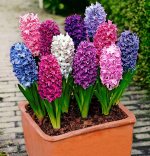
- Vibrant Colors: Boasts a rich color palette including red, pink, purple, blue, white, and yellow. Some varieties feature gradient or variegated effects. Fragrance intensity varies slightly by color, with blue varieties having the strongest scent.
- Basal Leaves: Thick, glossy, dark green leaves grow in a rosette around the flower stem. Lance-shaped, 15-25 cm long and 2-4 cm wide, typically 4-6 leaves cluster at the bulb base.
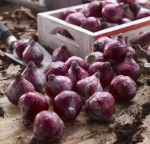
- Bulb Traits: Underground bulbs are spherical or flattened, 3-8 cm in diameter, covered with membranous scales in purple-blue, magenta, or white (scale color often correlates with flower color—e.g., red-flowering varieties have magenta scales). Bulbs store abundant nutrients to support flowering.
1.3 Growth Habits
- Climate Preference: Thrives in cool, humid environments with abundant sunlight. Intolerant of high temperatures and extreme cold, suitable for temperate climates. Enters dormancy in high summer temperatures and can tolerate short-term -5°C (23°F) in winter, but prolonged low temperatures may damage bulbs.
- Temperature Requirements: Optimal growth temperature is 10-20°C (50-68°F). Flower bud differentiation requires a 4-6 week cold period of 8-12°C (46-54°F); insufficient cold results in fewer flowers or malformed spikes. Flowering period prefers 15-18°C (59-64°F)—high temperatures shorten the flowering period.
- Water Needs: Loves moisture but fears waterlogging. For hydroponics, ensure roots touch water without submerging the bulb. For soil cultivation, keep soil slightly moist—dry soil hinders growth, while waterlogging causes bulb rot.
- Light Requirements: Needs 4-6 hours of full sunlight daily. Insufficient light leads to weak, leggy stems and poor spike development. Proper shading after flowering extends the blooming period and prevents petal fading from intense sunlight.
- Soil Adaptation: For soil cultivation, prefers loose, well-drained, organic-rich slightly acidic to neutral soil (pH 6.0-7.0). Heavy clay soil requires soil amendments to improve drainage.
1.4 Ornamental & Practical Value
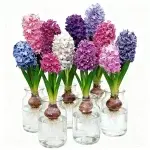
- Potted Ornamental: Hydroponic hyacinths offer clear root growth observation, highly decorative in transparent containers. Soil-grown potted plants have compact forms and fragrant flowers, ideal for living rooms, balconies, and windowsills—popular decorative plants during festivals.
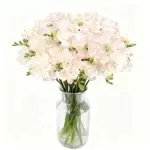
- Cut Flower Use: Straight stems and concentrated flowering period (2-3 weeks per plant) make it an excellent cut flower for bouquets and arrangements. Lasts 1-2 weeks in vases, perfect for indoor decoration.
- Garden Landscaping: In warm regions, suitable for flower beds, borders, and lawn edges. Planted with other early spring bulb flowers (tulips, crocuses) creates colorful early spring landscapes.
- Symbolism: Different colors carry distinct meanings—red represents "passion," pink symbolizes "romance and warmth," blue signifies "calmness and melancholy," white denotes "purity," and yellow symbolizes "vitality and sunshine." An ideal flower for expressing emotions.
Growing Guide (Hydroponic & Soil-Grown)
2.1 General Preparation (For Both Methods)
2.1.1 Bulb Selection & Treatment
Choose healthy bulbs that are undamaged, mold-free, plump, and firm, with a diameter of 5-6 cm (larger bulbs have stronger flowering ability). Before planting, peel off dry outer scales to expose healthy white or light-colored skin. Trim old roots from the bulb base with sterilized scissors if present.
Disinfection: Soak bulbs in 50% carbendazim 500x solution or potassium permanganate 1000x solution for 20-30 minutes. Remove and air-dry in a cool, ventilated place for 1-2 days until the bulb surface is completely dry—avoid planting damp bulbs to prevent rot.
2.1.2 Planting Time
Hyacinths are best planted in autumn: September-October in northern regions and October-November in southern regions. At this time, temperatures range from 10-20°C (50-68°F), favorable for root germination and flower bud differentiation. Planting too early (high temperatures) causes bulb rot; planting too late (low temperatures) delays root growth and flowering.
2.2 Hydroponic Method (Popular & High Ornamental Value)
Hydroponic
2.2.1 Container & Tool Selection
Prefer transparent glass or plastic containers such as wide-mouth bottles or specialized hydroponic vases (with bulb holders), 15-20 cm tall for easy root observation. Auxiliary tools: glass beads or pebbles (for bulb stabilization), rooting powder (optional, to promote root growth).
2.2.2 Planting Steps
- Container Disinfection: Rinse containers thoroughly with clean water, soak in carbendazim solution for 10 minutes, then air-dry—avoid residual bacteria infecting bulbs.
- Bulb Stabilization: For ordinary wide-mouth bottles, spread a layer of sterilized glass beads/pebbles at the bottom. Place treated bulbs on top with the base facing down, exposing the top above the container rim. Adjust bulb position with stones to ensure stability.
- Add Water: Pour clean water into the container, controlling the water level to touch only the bulb base (do not submerge the bulb—only roots need contact with water). Submerging the bulb causes rot.
- Initial Care: Place the planted hyacinth in a cool, ventilated area (10-15°C/50-59°F) away from direct sunlight. After roots grow to 2-3 cm and shoots emerge, move to a sunny location for maintenance.
2.2.3 Hydroponic-Specific Care Tips
- Water Quality Management: Change water every 3-5 days initially to keep it clean and prevent bacterial growth. After roots stabilize (over 5 cm long), change water every 7-10 days. Use water at room temperature to avoid root shock from temperature fluctuations.
- Water Level Control: Maintain water contact with the bulb base after each water change. As roots grow, slightly lower the water level to expose some roots to air, improving root aeration.
- Nutrient Solution Addition: To promote growth and flowering, add 1-2 drops of specialized hyacinth hydroponic nutrient solution (or diluted general-purpose flower nutrient solution) during water changes—once a month is sufficient (excess causes fertilizer burn).
- Rot Prevention: If mold appears on the bulb surface, wipe it with a sterilized cotton swab dipped in carbendazim solution immediately. For severe rot, remove the bulb, cut off rotten parts, re-disinfect, and replant in a new container with fresh water.
2.3 Soil-Grown Method (Traditional & Stable, Good for Bulb Regeneration)
Soil-Grown
2.3.1 Soil & Container Preparation
Soil Formulation: Recommended formulas: ① 4 parts leaf mold + 3 parts garden soil + 2 parts perlite + 1 part decomposed organic fertilizer; ② 5 parts peat moss + 2 parts coarse sand + 2 parts coco coir + 1 part bone meal. Disinfect soil after preparation by exposing to sunlight for 2 days or spraying with carbendazim solution to kill pathogens and insect eggs.
Container Selection: For potted plants, use ceramic or plastic pots 15-20 cm in diameter and 20-25 cm deep with drainage holes. For outdoor planting, select high-lying, well-drained areas, plow 30 cm deep, and mix in decomposed organic fertilizer to improve soil quality.
2.3.2 Planting Steps
- Pot Bottom Treatment: Line the pot bottom with 3-5 cm of ceramsite or gravel as a drainage layer. Fill 1/3 of the pot with potting soil, add a small amount of decomposed sheep manure or chicken manure as base fertilizer, and mix gently with the soil.
- Bulb Placement: Place disinfected bulbs in the pot with shoots facing upward. For single-bulb planting, position it in the center. For group planting, place 3-5 bulbs per pot with 5-8 cm spacing to avoid overcrowding.
- Cover with Soil: Fill the pot with soil to a thickness of 2-3 times the bulb diameter (6-10 cm). Shallow planting causes bulb toppling; deep planting delays germination. Gently compact the soil after covering to avoid looseness.
- Watering & Establishment: Water thoroughly after planting with slow, even water flow until water drains from the pot bottom. Place the pot in a cool, ventilated area and move to a sunny location after shoots emerge.
2.3.3 Soil-Grown-Specific Care Tips
- Water Management: Follow the "water when dry" principle—water only when the top 2-3 cm of soil is dry, and water thoroughly. Avoid waterlogging. Keep soil slightly moist before germination; water once a week during the growing period (after leaves unfurl). Reduce watering appropriately during flowering to prevent petal wilting.
- Fertilization Management: No fertilization from planting until germination to avoid root burn. After leaves unfurl (3-4 leaves), apply dilute balanced NPK fertilizer (1:1:1 ratio) once a month. During flower bud differentiation (shoots 5-10 cm tall), switch to phosphorus-potassium-rich fertilizer (e.g., potassium dihydrogen phosphate solution) every 2 weeks for 2-3 applications to promote plump flower spikes. Stop fertilization during flowering. After flowering, apply 1-2 applications of compound fertilizer to accumulate nutrients for bulb regeneration.
- Soil Loosening: Loosen soil once a month during the growing period to prevent compaction and improve aeration for root respiration. Be careful not to damage roots during loosening.
- Outdoor Protection: For outdoor planting in northern regions, cover the soil surface with 5-10 cm of straw or fallen leaves in winter to insulate bulbs from frost damage. No special protection is needed in southern regions, but ensure good drainage to avoid waterlogging from rain.
2.4 General Care Management (For Both Methods)
2.4.1 Light & Temperature Control
During the growing period (after shoots emerge), ensure 4-6 hours of daily sunlight—place on a south-facing balcony or windowsill. Use grow lights if sunlight is insufficient to prevent leggy growth. During flower bud differentiation (1-2 months after planting), maintain a 10-12°C (50-54°F) cold environment for 4-6 weeks—place on a cool balcony or in a refrigerator crisper (no lower than 5°C/41°F). Cold treatment ensures more uniform flowering. Control flowering period temperature at 15-18°C (59-64°F); avoid temperatures above 25°C (77°F) which shorten the blooming period. Proper shading extends the viewing time.
2.4.2 Flowering Period Management & Post-Flowering Treatment
Flowering Period Management: If displayed indoors, ensure regular ventilation to avoid discomfort from intense fragrance. Promptly remove withered flowers to keep spikes tidy and reduce nutrient consumption.
Post-Flowering Treatment: After flowering, cut off flower stems promptly while retaining leaves. Continue normal watering and fertilization to allow leaves to photosynthesize and accumulate nutrients for bulbs. After leaves naturally wither in summer, remove bulbs from hydroponic containers or dig up soil-grown bulbs. Trim withered leaves and roots, disinfect, air-dry, and store in a cool, dry place. Replant in autumn, but flowering quality is usually lower than the first year—hyacinths are often grown as annuals in home gardens.
2.4.3 Pest & Disease Control
- Common Diseases:
- Bulb Rot: Caused by waterlogging or infected bulbs, characterized by soft, moldy bulbs and yellowing/wilting leaves. Prevention: Select healthy bulbs, disinfect before planting, ensure good drainage. Treatment: Remove rotten bulbs promptly, thoroughly disinfect soil or containers.
- Leaf Spot: Brown spots appear on leaves, gradually expanding with mold. Prevention: Maintain good ventilation, avoid prolonged leaf dampness. Treatment: Remove infected leaves, spray with mancozeb or chlorothalonil solution every 7-10 days for 2-3 applications.
- Common Pests:
- Aphids: Cluster on leaves and flower spikes, sucking sap and causing leaf curling and spike deformation. Control: Rinse with water or soapy water, or spray with imidacloprid EC solution.
- Bulb Mites: Damage bulbs, causing rot and growth stunting. Prevention: Soak bulbs in dicofol solution before planting. Treatment: Replace soil or discard infested bulbs promptly.
2.5 Important Notes
- Hyacinth has a strong fragrance; some people are sensitive to it. Ensure good ventilation when placing indoors—avoid bedrooms or enclosed spaces to prevent dizziness, nausea, or other discomfort.
- For hydroponics, if roots show minor rot, promptly cut off rotten parts with sterilized scissors, replace water, and disinfect the container—plants can still grow normally.
- For soil-grown plants, if leggy growth occurs, reduce watering, increase sunlight exposure, or sprinkle a small amount of chlormequat chloride granules on the soil surface to control plant height.
- When purchasing bulbs, choose "pre-chilled" bulbs that have undergone cold treatment—no additional cold treatment is needed, and they flower quickly after planting. "Unchilled" bulbs require 4-6 weeks of cold treatment before planting to flower.
- Hyacinth bulbs are toxic, containing colchicine. Keep away from children and pets to prevent ingestion. Wash hands thoroughly after handling bulbs.




 English
  German
 Spanish
 Japanese





评价
目前还没有评价