






Red Carrot
Details & Complete Planting Guide
Ⅰ. Product Details
Variety Characteristics
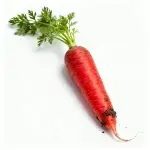
Red Carrot is a premium root vegetable variety with a growth cycle of 90-120 days. The roots are cylindrical with bright red skin and flesh, 20-30cm in length and 3-5cm in diameter, single root weight 150-250g. The plant has upright leaves with strong growth potential and good root straightness, suitable for both fresh consumption and processing.
Quality Advantages
- Flesh is crisp and sweet with high sugar content (8-10%), rich in β-carotene (vitamin A precursor), vitamin C, dietary fiber, potassium and antioxidants, which can improve eyesight and enhance immunity.
- Good storage performance: Mature roots can be stored in sand or cold storage for 3-5 months at 0-5℃, maintaining good quality and taste.
- Strong disease resistance: Resistant to root rot and black spot, with neat root shape and high commercial rate (over 90%).
High-Yield Characteristics
Under proper cultivation conditions, the yield per mu can reach 3000-4000kg. The variety has strong adaptability to soil and climate, suitable for planting in plains, hills and other regions, with cold resistance and drought tolerance, and can be planted in spring and autumn.
Application Scenarios
- Fresh food market: Used for raw eating, salad, stir-frying and soup cooking, popular in supermarkets and farmers’ markets;
- Processing industry: Suitable for making carrot juice, dehydrated carrot flakes, carrot powder, canned carrots and baby food;
- Health food: Rich in nutrients, it is an important raw material for health products and functional foods.
Selection & Storage Suggestions
- Selection skills: Choose roots with bright color, straight shape, smooth skin, no cracks, no insect damage and fresh leaves;
- Storage method: Remove leaves, store in a cool and ventilated place for short-term storage, or store in sand or refrigerator for long-term storage. Processed products can be stored at room temperature for 6-12 months.
Ⅱ. Planting Methods
Planting Preparation
1. Soil Selection
Red Carrot prefers loose, fertile, well-drained sandy loam or loam with pH value of 6.0-7.0. Avoid heavy clay soil and low-lying waterlogged land, and deep plow the land 30-40cm before planting to break up soil clods and remove stones and weeds. Apply base fertilizer: 2000-3000kg of decomposed organic fertilizer, 30-40kg of compound fertilizer and 15kg of potassium sulfate per mu. Mix evenly and make flat ridges with width of 1-1.2m.
2. Seed Treatment
- Seed selection: Choose full, disease-free seeds with high germination rate, with seed consumption of 1-1.5kg per mu;
- Seed soaking and germination: Carrot seeds have bristles and low germination rate, so they need to be treated before sowing. Rub seeds to remove bristles, soak in 25℃ warm water for 12-24 hours, then place in a wet gauze at 20-25℃ for germination, rinse with water once a day, and sow when seeds show white buds.
Sowing & Thinning
1. Sowing Time
- Spring sowing: March to April, harvest in June to July;
- Autumn sowing: August to September, harvest in November to December, with better quality and higher yield in autumn sowing.
2. Sowing Methods
- Drill sowing: Make shallow furrows 1-2cm deep on the ridge with row spacing of 20-25cm, sow seeds evenly in the furrows, cover with 1cm fine soil, water thoroughly, and cover with straw to keep moisture;
- Broadcast sowing: Mix seeds with fine soil and broadcast evenly on the ridge, then rake lightly and water, suitable for small-area planting.
3. Thinning & Final Singling
- First thinning: When seedlings have 1-2 true leaves, thin out weak seedlings, keep plant spacing of 2-3cm;
- Second thinning: When seedlings have 3-4 true leaves, thin again with plant spacing of 5-6cm;
- Final singling: When seedlings have 5-6 true leaves, fix plant spacing at 8-10cm to ensure sufficient growth space for roots.
Field Management
1. Water Management
- Seedling stage: Keep soil moist to promote emergence, water frequently with small amount;
- Leaf growth period: Control watering properly to promote root down growth, water in time when soil is dry;
- Root expansion period: Ensure adequate water supply, water once every 7-10 days, avoid drought and waterlogging, and keep soil moisture stable to prevent root cracking;
- Before harvest: Reduce watering 10-15 days before harvest to improve root quality and storage resistance.
2. Fertilizer Management
- Seedling fertilizer: Apply 5-8kg of urea per mu 15 days after emergence to promote seedling growth;
- Leaf fertilizer: Apply 10-15kg of compound fertilizer per mu at vigorous leaf growth stage;
- Root fertilizer: Apply 15-20kg of compound fertilizer + 10kg of potassium sulfate per mu at initial root expansion stage, and spray 0.2% potassium dihydrogen phosphate solution on leaves for 1-2 times to promote root expansion.
3. Weed Control
- Manual weeding: Remove weeds in time during seedling stage, shallow tillage to avoid damaging roots;
- Chemical weeding: Spray herbicides (such as trifluralin) before sowing or after emergence, and follow the instructions for use.
4. Disease & Pest Control
- Root rot: Use 50% carbendazim wettable powder 800x solution for root irrigation;
- Black spot: Spray with 75% chlorothalonil wettable powder 600x solution;
- Carrot fly: Use yellow sticky traps for trapping, or spray 48% chlorpyrifos EC 1000x solution;
- Aphids: Control with 10% imidacloprid wettable powder 1500x solution spray.
Harvesting
- Harvest time: Harvest when roots are fully expanded and leaves turn yellow (90-120 days after sowing). Spring-sown carrots should be harvested in time to avoid bolting; autumn-sown carrots can be harvested before frost;
- Harvesting method: Loosen soil around roots with a shovel, then pull out carrots by hand, or use a harvester for large-area planting. Cut off leaves after harvest, leaving 1-2cm petioles;
- Post-harvest treatment: Sort by size, remove damaged roots, wash and package for fresh sale, or process into various products, or store in sand or cold storage.






评价
目前还没有评价