
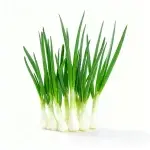
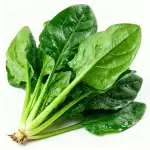


Shanghai Green Baby Bok Choy
Details & Complete Planting Guide
Ⅰ. Product Details
Variety Characteristics
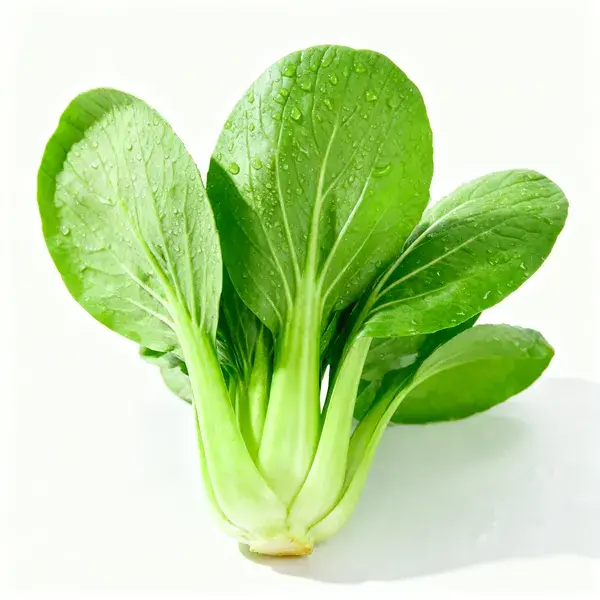
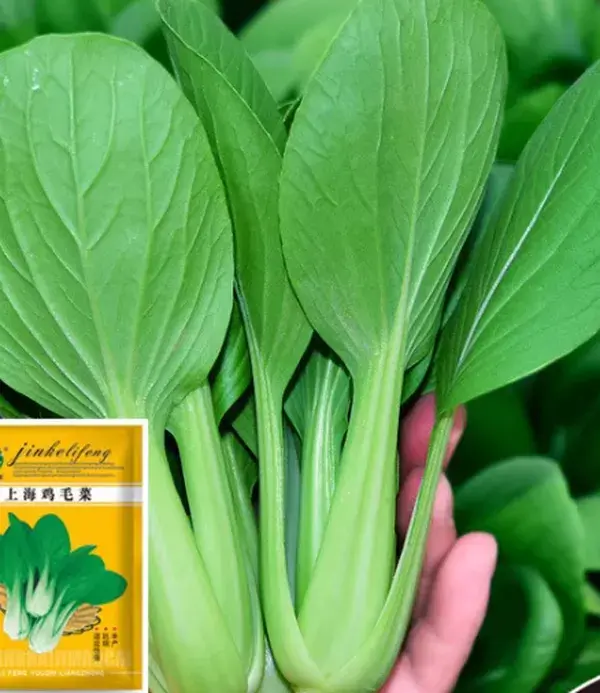
Shanghai Green Baby Bok Choy (Brassica rapa var. chinensis) is a fast-growing leafy vegetable of the Brassicaceae family with a short growth cycle of 20-40 days. It features small, tender rosettes (10-15cm height) with bright green leaves and pale green stems, forming compact plants with delicate texture. The variety has good cold tolerance and bolt resistance, suitable for cultivation throughout the year in mild climates and winter greenhouse production in cold regions.
Quality Advantages
- Exceptionally tender texture with mild, sweet flavor and no bitter aftertaste, perfect for quick cooking methods;
- Nutritional richness: High in vitamin C, vitamin A, calcium, iron, potassium and dietary fiber, with antioxidant properties;
- Short growing cycle: Can be harvested in as little as 20 days for microgreens or 30-40 days for full-sized plants;
- High density planting: 8000-10000 plants per mu, suitable for intensive production;
- Multiple harvests: Can be cut-and-come-again for successive harvests or sown at intervals for continuous supply.
High-Yield Characteristics
Under proper cultivation management, the yield per mu can reach 1500-2000kg per crop with 8-10 crops annually through staggered sowing. The variety adapts well to various growing systems including open fields, greenhouses, containers and hydroponics. It has good resistance to downy mildew and soft rot, with uniform growth and maturity, making it suitable for commercial production and home gardening.
Application Scenarios
- Fresh market: Popular in Asian cuisine for stir-fries, soups, hot pots and salads;
- Microgreen production: Harvested at 10-15 days for use as garnish and nutrient-rich addition to dishes;
- Urban agriculture: Ideal for balcony and small garden growing due to compact size and short cycle;
- Commercial farming: Suitable for both conventional and organic production systems;
- Food service industry: Preferred by restaurants for consistent quality and quick cooking properties;
- Export market: High demand in international markets for authentic Shanghai-style vegetables.
Selection & Storage Suggestions
- Selection skills:
- Choose compact plants with bright green, crisp leaves and no yellowing or insect damage;
- Check for firm, succulent stems and fresh root base;
- Avoid plants with signs of bolting (elongated center stem) which indicates toughness.
- Storage method:
- Short-term storage: Wrap in damp paper towel and store in refrigerator crisper for 5-7 days;
- Long-term storage: Blanch for 1-2 minutes and freeze for up to 3 months;
- Preservation: Can be pickled or fermented for extended use;
- Freshness maintenance: Trim root ends and place in shallow water for 1-2 days at room temperature.
Ⅱ. Planting Methods
Planting Preparation
1. Site Selection
Shanghai Green Baby Bok Choy grows best in fertile, well-drained loamy soil with pH 6.0-7.0 and full sunlight (4-6 hours daily). It tolerates partial shade, especially in hot weather. Avoid fields with recent brassica cultivation to prevent soil-borne diseases. The site should have good air circulation and be protected from strong winds. For hydroponic cultivation, use NFT systems or floating rafts with nutrient solution EC 1.2-1.8 mS/cm.
2. Soil Preparation
- Plow soil to 20-25cm depth and remove debris and weeds;
- Apply 2000-3000kg decomposed organic fertilizer + 20kg compound fertilizer (N:P:K=15:15:15) per mu;
- Adjust soil pH to 6.0-7.0 with lime if acidic or sulfur if alkaline;
- Create raised beds 15-20cm high for better drainage, 1.2-1.5m wide for easy management;
- For container growing: Use potting mix with garden soil, compost and perlite (2:1:1 ratio).
Planting Methods
1. Sowing Time
- Spring: March to April when temperature ≥10℃;
- Summer: May to August with shade protection;
- Autumn: September to October (optimal season for best quality);
- Winter: November to February in greenhouses or southern regions;
- Staggered sowing: Sow every 10-15 days for continuous harvest.
2. Planting Techniques
- Direct seeding:
- Broadcast seeds evenly or sow in rows 10-15cm apart;
- Cover with 0.5-1cm fine soil and water gently;
- Seed rate: 0.5-0.8kg per mu;
- Thin seedlings to 5-8cm spacing when 2-3 true leaves appear;
- For baby leaf production: Sow densely and harvest at 10-15cm height without thinning.
- Transplanting:
- Sow seeds in seedling trays and transplant at 2-3 true leaf stage (10-15 days);
- Plant spacing: 8×10cm for baby size, 15×20cm for full size;
- Transplant in late afternoon or cloudy days, water thoroughly after planting;
- Cover with shade net for 2-3 days to reduce transplant shock.
- Container planting:
- Use pots or trays with minimum depth of 15cm;
- Sow 3-4 seeds per pot and thin to 2 strongest seedlings;
- Place in sunny location with good drainage;
- Hydroponic method: Use rockwool cubes or sponge media for seed germination.
Field Management
1. Water & Fertilizer Management
- Water management:
- Keep soil consistently moist but not waterlogged;
- Water once every 2-3 days in dry weather, reduce in rainy season;
- Use drip irrigation or furrow irrigation to avoid wetting leaves;
- In hot weather, water in early morning or late afternoon;
- For hydroponics: Maintain water temperature 18-25℃ and pH 5.5-6.5.
- Fertilizer management:
- Base fertilizer: Apply sufficient organic fertilizer before planting;
- Topdressing: Apply 5-8kg urea per mu 10 days after sowing or transplanting;
- Second topdressing: Apply 8-10kg compound fertilizer per mu 15-20 days after first application;
- Foliar fertilizer: Spray 0.2% potassium dihydrogen phosphate solution during rapid growth;
- Avoid excessive nitrogen which causes soft growth and disease susceptibility.
2. Cultural Practices
- Weed control: Remove weeds regularly by hand or use shallow cultivation;
- Thinning: Thin overcrowded seedlings to ensure proper spacing;
- Mulching: Apply straw or plastic mulch to retain moisture and suppress weeds;
- Shade protection: Provide 30% shade in summer to prevent bolting and wilting;
- Row covers: Use insect-proof netting to prevent pest damage;
- Crop rotation: Rotate with non-brassica crops every 2-3 seasons.
3. Disease & Pest Control
- Damping off and root rot:
- Use sterilized soil and proper drainage;
- Treat seeds with fungicide before sowing;
- Apply 50% carbendazim 800x solution for infected plants.
- Downy mildew and powdery mildew:
- Improve ventilation and avoid high humidity;
- Spray with 75% chlorothalonil 600x solution or 25% triadimefon 1500x solution;
- Remove and destroy severely infected plants.
- Diamondback moth and cabbage worm:
- Use Bt (Bacillus thuringiensis) emulsion 500x solution;
- Install pheromone traps for monitoring and control;
- Release parasitic wasps for biological control.
- Aphids and flea beetles:
- Control with 10% imidacloprid 1500x solution;
- Use yellow sticky traps for aphids;
- Diatomaceous earth for flea beetle control.
Harvesting
- Harvest time:
- Microgreens: 10-15 days after sowing (3-4 true leaves);
- Baby size: 20-25 days (10-12cm height);
- Full size: 30-40 days (15-20cm height);
- Harvest in morning when plants are crisp and hydrated;
- For cut-and-come-again: Harvest outer leaves, leaving center to regrow.
- Harvesting method:
- Cut at base with sharp knife or scissors, 1-2cm above ground;
- For bunching: Tie 8-10 plants together;
- Remove old or damaged leaves before packing;
- Handle gently to avoid bruising;
- Harvest in batches for extended supply.
- Post-harvest handling:
- Clean with clean water and dry before packing;
- Pre-cool to 0-5℃ within 2 hours of harvest;
- Pack in perforated plastic bags or containers;
- Store at 0-5℃ with 95% relative humidity for 7-10 days;
- For market: Grade by size and quality, discard substandard produce.







评价
目前还没有评价