I. Plant Overview
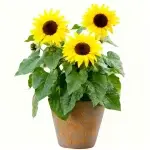
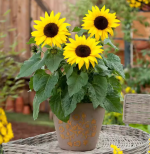
Insert sunflower real image here (Recommended size: 100% width, 200px height)
| Item |
Details |
| Scientific Name |
Helianthus annuus L. |
| Family & Genus |
Asteraceae, Helianthus |
| Common Names |
Sunflower, Turnsole, Mirasol, Sun Bloom |
| Origin |
Tropical regions of the Americas |
| Growth Cycle |
Annual herb, 80-120 days |
| Flowering Period |
July-September; individual flowers bloom for 10-15 days, whole plant flowering period lasts about 30 days |
| Suitable Scenarios |
Balcony potted plants, garden decoration, cut flower production, field cultivation |
Sunflowers get their name from their characteristic of following the sun’s movement. They have distinct core features: large, bright flower heads predominantly golden yellow in color with full, vigorous blooms; strong adaptability, suitable for balcony potted planting to large-scale field cultivation; and multiple values including ornamental, edible, and economic uses, making them an ideal choice for novice gardeners.
II. Morphological Characteristics
Sunflowers have a tall, upright plant type, typically reaching 1-3 meters in height (dwarf varieties: 30-60 cm), with an overall robust and regular shape:
- Stem: Thick and upright, covered with white coarse hairs, highly lignified with strong supporting capacity to bear the weight of the flower head; dwarf varieties have relatively slender but tough stems.
- Leaves: Alternate, broadly ovate or heart-shaped with coarse serrated edges, rough leaf surface, dark green color, and large size (10-30 cm), boasting strong photosynthetic capacity.
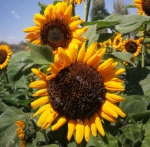
- Flower Head: Solitary at the top of the stem, 10-30 cm in diameter, composed of ray florets (brightly colored to attract insects) and disk florets (bisexual, developing into fruits). Follows the sun from early to full flowering stages, and fixes facing east when mature.
- Fruit: Achene (sunflower seed), obovate or ovate-oblong in shape, with black-and-white striped or solid black seed coats, hard texture, rich in oil and nutrients. Seed germination rate can last 3-5 years.
III. Growth Habits
Sunflowers are typical sun-loving, heat-loving, and drought-tolerant plants with extremely strong adaptability and loose environmental requirements:
- Temperature: Optimal growth temperature is 20-30℃; seed germination requires temperatures above 10℃ (best at 15-25℃). Heat-tolerant (grows normally above 35℃) but weak cold tolerance (growth stagnates below 5℃, frost causes death).
- Light: Absolutely sun-loving, requiring more than 8-10 hours of direct sunlight daily. Sufficient light results in thick stems, large flower heads, and bright colors; insufficient light easily leads to leggy growth, lodging, and small flower heads.
- Soil: Not demanding on soil types (sandy soil, loam, light clay are all suitable), prefer loose, fertile, well-drained slightly acidic to neutral soil (pH 6.0-7.5). Drought-tolerant and barren-tolerant, but intolerant of waterlogging.
- Water: Highly drought-tolerant, requiring less water during seedling stage; water demand increases during growth and budding stages, but adhere to “prefer dry over wet” principle. Waterlogging easily causes root rot; reduce water in late maturity stage to prevent lodging.
- Special Characteristics: Fast growth rate (flowers in 2-3 months); well-developed root system (taproot up to 1-2 meters deep) with strong soil-fixing capacity and moderate wind resistance; wind protection needed for large-scale cultivation.
IV. Core Values
1. Ornamental Value: Symbol of Sunshine, Visual Focus
With large, bright flower heads full of vitality and positive energy, sunflowers are natural “sunshine symbols.” Dwarf varieties are suitable for balcony potted plants; medium and tall varieties can form vibrant garden landscapes. Cut flowers have a 7-10 day vase life, making them popular for floral arrangements, wedding decorations, and holiday ornaments, instantly enhancing scene brightness.
2. Edible & Economic Value: A Plant of Many Uses, Diverse Benefits
Mature sunflower seeds can be eaten directly (plain, salted, etc.) or pressed for healthy edible oil (oil content about 50%). Immature seeds on the flower head are also edible; stems can be used as feed or for papermaking, and leaves as green feed, with high comprehensive utilization rate.
3. Ecological Value: Eco-Friendly, Promoting Balance
Sunflowers have a long flowering period with abundant pollen and nectar, serving as important nectar sources for bees, butterflies, and other beneficial insects. Large-scale cultivation can absorb dust, improve soil structure, and is suitable for wasteland greening and ecological restoration, promoting regional ecological balance.
V. Scientific Cultivation Guide
Insert sunflower cultivation scene image here (Recommended size: 100% width, 200px height)
1. Planting Time Selection: Adapt to Local Conditions, Grasp Temperature
Sunflowers are heat-loving and cold-intolerant; planting time should be adjusted according to local climate, with soil temperature stably above 10℃ as the standard:
- Southern Regions (Yangtze River Basin and south): Spring sowing in March-April, or autumn sowing in August-September (protect from cold in autumn to avoid frost affecting fruiting).
- Northern Regions (Yellow River Basin and north): Spring sowing in April-May is preferred, with stable temperature rise and sufficient light to avoid uneven germination caused by early sowing in low temperature.
- Balcony Potted Plants: Seedling in indoor 1-2 weeks in advance (mid-to-late March), transplant outdoors when temperature stabilizes to extend growth cycle.
2. Soil Preparation: Loose & Breathable, Moderate Fertilization
Sunflowers are barren-tolerant, but loose and fertile soil can promote vigorous growth and larger flower heads:
- Soil Ratio: Recommended formula: 4 parts garden soil + 3 parts leaf mold + 2 parts river sand + 1 part decomposed organic fertilizer. Mix well and expose to sun for 3-5 days to disinfect, killing insect eggs and pathogens.
- Soil Improvement: Add perlite or coarse sand to heavy clay soil to improve drainage; add a small amount of wood ash to acidic soil to adjust pH value.
- Base Fertilizer Application: Mix a small amount of decomposed chicken manure, sheep manure, or compound fertilizer (15-20 kg per mu) into the soil before planting. Avoid direct contact between base fertilizer and seeds to prevent seedling burning.
3. Sowing Methods: Direct Sowing as Main, Seedling Transplantation as Supplement
Sunflower seeds have high germination rate; direct sowing is the most common method, while seedling transplantation is suitable for early planting or potted cultivation:
- Seed Pretreatment: No soaking required for fresh seeds; soak seeds stored for a long time in 30℃ warm water for 4-6 hours, dry before sowing to improve germination rate.
- Direct Sowing Method: Dig holes with plant spacing 30-50 cm and row spacing 50-80 cm (depth 2-3 cm), place 2-3 seeds per hole, cover with fine soil, compact gently, and water thoroughly. Drill sowing (row spacing 60-80 cm) for large-scale cultivation.
- Seedling Transplantation: Sow seeds in seedling trays or nutrient pots, cover with 1-2 cm fine soil, keep soil moist and temperature at 15-25℃, seedlings emerge in 5-7 days. Transplant with soil when seedlings have 4-6 true leaves, water thoroughly after transplanting, and let seedlings acclimate for 3-5 days.
- Potted Plant Note: Choose flower pots with diameter 20-30 cm, plant 1 seedling per pot to avoid poor ventilation due to overcrowding.
4. Seedling Stage Management: Thinning Seedlings, Promote Strong Growth
The seedling stage (before 4-6 true leaves) is crucial for cultivating strong seedlings:
- Thinning Seedlings: After direct sowing germination, thin seedlings when they have 2-3 true leaves, keep 1 healthy seedling per hole, and remove weak or diseased seedlings.
- Water Control: Less water needed in seedling stage, keep soil slightly moist to avoid leggy growth and root rot. Water in the morning or evening.
- Cultivation & Weeding: Conduct 1-2 cultivations for direct sown plants in seedling stage to loosen soil, remove weeds, and promote root growth.
- Prevent Leggy Growth: If seedlings have weak stems and long internodes, reduce water, increase light, and spray low-concentration paclobutrazol if necessary to control height.
5. Growth Period Management: Appropriate Water & Fertilizer, Control Excessive Growth
From seedling establishment to budding stage (30-40 days), sunflowers grow rapidly and require enhanced management:
| Management Item |
Specific Methods |
| Watering |
Increased water demand during growth period; keep soil moist during budding and flowering stages but avoid waterlogging. Drain timely on rainy days; reduce water appropriately in late flower head maturity stage. |
| Fertilization |
Topdress 1-2 times during growth period; apply compound fertilizer (10-15 kg per mu) or spray 0.2% potassium dihydrogen phosphate on leaves before budding. Avoid excessive nitrogen fertilizer to prevent leggy growth and lodging. |
| Pruning |
No pruning needed for ordinary varieties; remove excessive side branches promptly. Dwarf varieties can retain 2-3 side branches to promote more flowering. |
| Lodging Prevention |
For medium and tall varieties during flower head expansion stage, set up supports to prop stems or mound soil around roots in windy areas. |
6. Flowering & Fruiting Stage Management: Protect Flowers & Fruits, Promote Maturity
- Auxiliary Pollination: Outdoor planting relies on natural pollination by insects; for closed environments (e.g., balconies), artificial pollination is needed—gently wipe stamens of different flower heads with cotton swabs or soft brushes to transfer pollen.
- Water Control: Keep soil moist during flowering stage; reduce water (keep soil slightly dry) during fruiting stage to facilitate seed filling and maturity.
- Bird Protection: After seeds plumpen in fruiting stage, cover flower heads with breathable gauze or insect nets to prevent bird pecking.
- Sun Protection: Provide shade for 1-2 hours at noon during continuous high-temperature exposure to prevent flower head scorching and extend flowering period.
7. Pest & Disease Control: Prevention First, Comprehensive Control
Sunflowers have strong disease resistance with few pests and diseases. Common issues and control methods:
(1) Diseases: Powdery Mildew, Black Spot Disease, Rust
- Prevention: Rational planting density, maintain ventilation and light; avoid soil waterlogging; clean diseased leaves and fallen leaves regularly.
- Control: Spray 800x dilution of carbendazim or 1000x dilution of thiophanate-methyl at early stage of disease, once every 7-10 days, for 2-3 consecutive times.
(2) Pests: Aphids, Sunflower Moth, Chafer Beetles
- Aphids: Spray 1500x dilution of imidacloprid solution.
- Sunflower Moth/Chafer Beetles: Manual capture, or spray 1000x dilution of lambda-cyhalothrin (spray before flowering to avoid affecting pollinating insects).
8. Harvesting & Seed Preservation
- Harvest Time: Ornamental flowers—harvest when flower heads are fully open and colors are brightest; Edible seeds—harvest when flower heads turn yellow, leaves wither, seeds harden, and seed coats darken (30-40 days after flowering).
- Harvest Method: Cut flower heads 10-15 cm below the base with scissors, dry in a well-ventilated and dry place, then rub to collect seeds after they are completely dry.
- Seed Preservation: Select plants with large flower heads, plump seeds, and no pests/diseases for seed saving. Remove impurities and shrunken seeds, store in sealed containers (e.g., glass bottles, cloth bags) in a dry, cool, and well-ventilated place to avoid moisture and pests.
Pro Tips: Dwarf varieties (e.g., “Teddy Bear Sunflower,” “Mini Sunflower”) are ideal for balcony potted plants, with plant height 30-50 cm and flower head diameter 5-10 cm, featuring high ornamental value and space-saving. To grow larger flower heads, remove side buds during budding stage to concentrate nutrients on the main flower head. For cut flowers, harvest when flower heads are half-open, and insert into clean water immediately to extend vase life. Sunflowers have the ability to absorb heavy metals, so they should not be planted in industrial polluted areas or soil with excessive heavy metals.





 English
  German
 Spanish
 Japanese






评价
目前还没有评价