Peach Egg Old Stem Succulent - Product Details & Care Guide
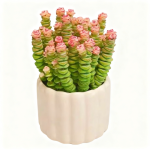
Peach Egg Old Stem Succulent (Pachyphytum 'Blue Haze')
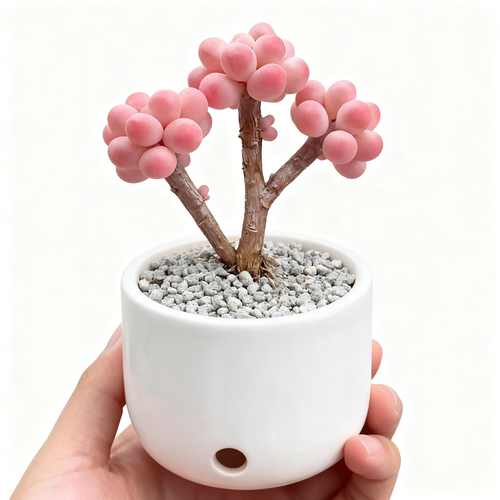
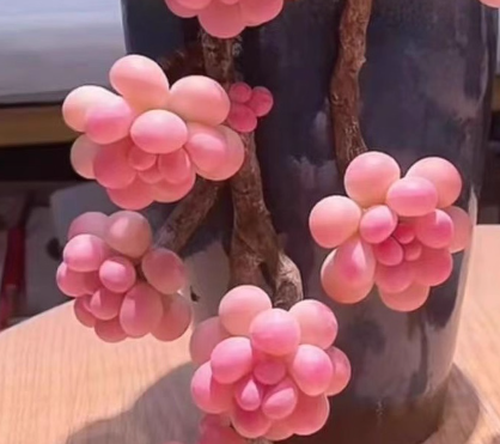
Plump Pink "Peaches" + Lignified Stems, A Cute Succulent With Beauty & Texture
Details zum Produkt
Wesentliche Merkmale
A succulent plant of the Crassulaceae family, "old stem" refers to mature plants over 2 years old with lignified stems – the "cute top stream" in the succulent world.
Plump and round oval leaves resemble pink peaches, with colors graduating from green to pink-purple. Under sufficient light, leaves are pink and translucent with a thin bloom (powdery coating).
Retains the cuteness of seedlings while adding unique charm – thick lignified stems (erect or trailing) form a natural and primitive shape, with higher ornamental value than seedlings.
Strong adaptability, drought-tolerant but waterlogging-intolerant, low maintenance – suitable for beginners and collectible for senior succulent lovers.
Symbolizes "sweetness and completeness, cuteness", an excellent choice for decorating spaces and conveying heartfelt wishes.
Anwendungsszenarien
Desk Potting: Small to medium old stems on desks/windowsills – plump leaves relieve eye strain and add a healing vibe.
Succulent Arrangement: As the core plant with other small succulents, creating layered succulent landscapes.
Balkon-Gartenbau: Placed on balcony shelves in groups, showing a pink scene under sufficient light with strong atmosphere.
Verschenken: Packaged as gifts for friends, colleagues, and succulent lovers – high appearance and good meaning, full of heartfelt sincerity.
Innenanzeige: Placed in living room or hallway corners, requiring no frequent care, enhancing space style with static beauty.
Wachstumsstatus: Lignified stems, plump non-wilted leaves, pest-free, with original soil clod
Merkmale der Sorte: Thick water-storing leaves, growing season in spring and autumn, semi-dormant in summer, moderate cold tolerance in winter
Pflege- und Anzuchtanleitung
1Pot & Soil Selection: Ventilation & Drainage Are Key
Prioritize terracotta or rough ceramic pots with drainage holes, 1-2cm smaller in diameter than the canopy – avoid oversized pots to prevent waterlogging.
For tall old stems with high center of gravity, choose slightly heavier pots to prevent tipping over.
Soil formula: Granular soil (akadama + maifan stone + lava rock) + nutrient soil = 7:3, or use succulent old stem special soil mixed with a small amount of slow-release fertilizer (buried at the bottom, away from roots). Ensure soil is loose, breathable, and non-compacted for drainage and root respiration.
2Light Requirements: Sufficient Light for Pink Color
Need sufficient light in spring, autumn, and winter – 4-6 hours of direct sunlight daily (south-facing balcony/windowsill is best). The more sufficient the light, the pinker the leaves and more compact the plant shape.
Summer shade: Provide 50% shade when temperature exceeds 32℃ (use sunshade net or move to scattered light area) to avoid leaf scorching, yellowing, and rotting.
Insufficient light causes elongated leaves, green color, and leggy stems – supplement light in time with succulent grow lights (4-5 hours daily).
3Watering Principles: Better Dry Than Wet, Avoid Waterlogging
Streng befolgen "Nur bei Trockenheit gießen, beim Gießen gründlich wässern"." – water only when soil is completely dry (test with a toothpick: no moisture when pulled out) or leaves are slightly wilted.
Spring & Autumn: Water every 10-15 days during the growing season, pour slowly along the pot edge for full soil absorption. Avoid splashing water on leaves (prevent bloom loss and leaf rot).
Summer watering: Reduce water during semi-dormancy – water "survival water" every 20-30 days (a small amount along the pot edge to keep soil slightly moist) to avoid root rot from high temperature and humidity.
Winter Bewässerung: Kontrollieren Sie die Bewässerung, wenn die Temperatur unter 5℃ liegt - gießen Sie alle 30-40 Tage oder stellen Sie die Bewässerung ganz ein, halten Sie den Boden trocken, um ein Einfrieren der Wurzeln zu verhindern.
Optimal growth temperature: 15-28℃ – leaves are plump, growth is steady, and color is pink in this range.
Schutz im Winter: Bewegen Sie drinnen an einem warmen Ort, wenn die Temperatur unter 5℃ ist, weg von kalten Zugluft, halten Sie die Temperatur ≥5℃, um Blatt und Stiel Einfrieren zu vermeiden.
Kühlung im Sommer: In einen gut belüfteten, schattigen Bereich bringen, wenn die Temperatur 35℃ übersteigt, die Luftzirkulation verbessern (ggf. einen kleinen Ventilator verwenden), um Blattfäulnis aufgrund von Stickigkeit zu vermeiden.
Düngen Sie nur im Frühjahr und im Herbst - stellen Sie die Düngung während der Sommer- und Winterruhe ein, um Düngerverbrennungen zu vermeiden.
Fertilizer selection: Use succulent-specific slow-release fertilizer (buried once during growing season, valid for 3-6 months) or diluted succulent liquid fertilizer (1/4 of the recommended concentration).
Häufigkeit der Düngung: Flüssigdünger einmal im Monat am Topfrand entlang ausbringen, dabei direkten Kontakt mit Wurzeln und Blättern vermeiden. Ergänzen Sie alle 3 Monate mit Langzeitdünger, passen Sie die Dosierung je nach Pflanzengröße an (1-2 Gramm).
6Pruning & Shaping: Maintain Old Stem Beauty
Prune best in spring and autumn growing seasons – promptly trim dry leaves and weak side branches to avoid nutrient consumption.
Shaping method: For compact shape, ensure sufficient light + water control to avoid leggy growth. If stems are too long, cut the top in spring to promote side shoot growth and form clumping old stems.
Dry leaf cleaning: Regularly remove dry leaves at the bottom of stems for beauty and ventilation, preventing bacteria growth from accumulated dry leaves.
7Repotting & Propagation
Repot every 1-2 years, best in spring (March-April). Gently tap the pot wall to remove the plant, shake off some old soil, trim rotten and dry roots, and air-dry for 1-2 days before repotting.
Propagation method: Old stems are suitable for cutting propagation. In spring, cut healthy side branches (with 2-3 leaves), remove lower leaves, air-dry the cut for 3-5 days, insert into moist granular soil, maintain temperature at 20-25℃, and roots will form in 2-3 weeks.
8Pest & Disease Control
Häufige Krankheiten: Schwarzfäule und Wurzelfäule (meist verursacht durch Staunässe und schlechte Belüftung). Im Anfangsstadium die Pflanze aus dem Topf nehmen, faule Teile abschneiden, die Schnittstelle mit Carbendazim-Lösung desinfizieren, mit neuer Erde umtopfen und später die Belüftung und Wasserkontrolle verbessern.
Häufige Schädlinge: Scale insects and root mealybugs. For scale insects, wipe leaves and stems with alcohol-soaked cotton. For root mealybugs, remove the plant to clean roots, soak roots in diluted insecticide for 10 minutes, air-dry, and repot.
Bewertungen
Es sind noch keine Bewertungen vorhanden.
Seien Sie der Erste, der “Peach Egg Old Stem Succulent with Three Heads (5-7cm) Pot Not Included” bewertet.” Antwort abbrechen
MAECENAS IACULIS
Vestibulum curae torquent diam commodo parturient penatibus nunc dui adipiscing convallis bulum parturient suspendisse parturient a.Parturient in parturient scelerisque nibh lectus quam a natoque adipiscing a vestibulum hendrerit et pharetra fames nunc natoque dui.
ADIPISCING CONVALLIS BULUM
Vestibulum penatibus nunc dui adipiscing convallis bulum parturient suspendisse.
Abitur parturient praesent lectus quam a natoque adipiscing a vestibulum hendre.
Scelerisque adipiscing bibendum sem vestibulum et in a a purus lectus faucibus lobortis tincidunt purus lectus nisl class eros.condimentum a et ullamcorper dictumst mus et tristique elementum nam inceptos hac parturient scelerisque vestibulum amet elit ut volutpat.



 English
  German
 Spanish
 Japanese




Bewertungen
Es sind noch keine Bewertungen vorhanden.