Peach Egg Old Stem Succulent - Product Details & Care Guide
Peach Egg Old Stem Succulent (Pachyphytum 'Blue Haze')
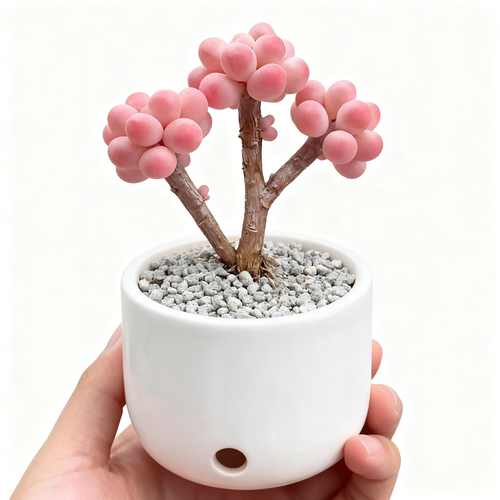
Plump Pink "Peaches" + Lignified Stems, A Cute Succulent With Beauty & Texture
Product Details
Key Features
A succulent plant of the Crassulaceae family, "old stem" refers to mature plants over 2 years old with lignified stems – the "cute top stream" in the succulent world.
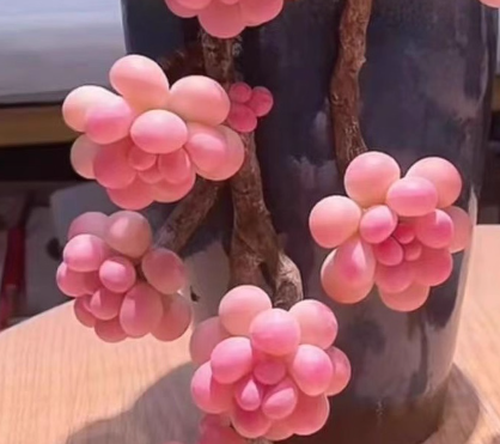
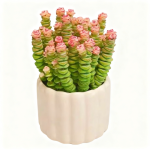
Plump and round oval leaves resemble pink peaches, with colors graduating from green to pink-purple. Under sufficient light, leaves are pink and translucent with a thin bloom (powdery coating).
Retains the cuteness of seedlings while adding unique charm – thick lignified stems (erect or trailing) form a natural and primitive shape, with higher ornamental value than seedlings.
Strong adaptability, drought-tolerant but waterlogging-intolerant, low maintenance – suitable for beginners and collectible for senior succulent lovers.
Symbolizes "sweetness and completeness, cuteness", an excellent choice for decorating spaces and conveying heartfelt wishes.
Application Scenarios
Desk Potting: Small to medium old stems on desks/windowsills – plump leaves relieve eye strain and add a healing vibe.
Succulent Arrangement: As the core plant with other small succulents, creating layered succulent landscapes.
Balcony Landscaping: Placed on balcony shelves in groups, showing a pink scene under sufficient light with strong atmosphere.
Gift Giving: Packaged as gifts for friends, colleagues, and succulent lovers – high appearance and good meaning, full of heartfelt sincerity.
Indoor Display: Placed in living room or hallway corners, requiring no frequent care, enhancing space style with static beauty.
Canopy Size: 8cm / 12cm / 18cm / 25cm (single head or 3-5 heads clumping optional)
Pot Material: Terracotta Breathable Pot / Rough Ceramic Pot / Simple Plastic Pot (optional, with drainage holes)
Growth Status: Lignified stems, plump non-wilted leaves, pest-free, with original soil clod
Variety Traits: Thick water-storing leaves, growing season in spring and autumn, semi-dormant in summer, moderate cold tolerance in winter
Care & Growing Guide
1Pot & Soil Selection: Ventilation & Drainage Are Key
Prioritize terracotta or rough ceramic pots with drainage holes, 1-2cm smaller in diameter than the canopy – avoid oversized pots to prevent waterlogging.
For tall old stems with high center of gravity, choose slightly heavier pots to prevent tipping over.
Soil formula: Granular soil (akadama + maifan stone + lava rock) + nutrient soil = 7:3, or use succulent old stem special soil mixed with a small amount of slow-release fertilizer (buried at the bottom, away from roots). Ensure soil is loose, breathable, and non-compacted for drainage and root respiration.
2Light Requirements: Sufficient Light for Pink Color
Need sufficient light in spring, autumn, and winter – 4-6 hours of direct sunlight daily (south-facing balcony/windowsill is best). The more sufficient the light, the pinker the leaves and more compact the plant shape.
Summer shade: Provide 50% shade when temperature exceeds 32℃ (use sunshade net or move to scattered light area) to avoid leaf scorching, yellowing, and rotting.
Insufficient light causes elongated leaves, green color, and leggy stems – supplement light in time with succulent grow lights (4-5 hours daily).
3Watering Principles: Better Dry Than Wet, Avoid Waterlogging
Strictly follow "Water only when dry, water thoroughly when watering" – water only when soil is completely dry (test with a toothpick: no moisture when pulled out) or leaves are slightly wilted.
Spring & Autumn: Water every 10-15 days during the growing season, pour slowly along the pot edge for full soil absorption. Avoid splashing water on leaves (prevent bloom loss and leaf rot).
Summer watering: Reduce water during semi-dormancy – water "survival water" every 20-30 days (a small amount along the pot edge to keep soil slightly moist) to avoid root rot from high temperature and humidity.
Winter watering: Control water when temperature is below 5℃ – water every 30-40 days or stop watering completely, keep soil dry to prevent root freezing.
Optimal growth temperature: 15-28℃ – leaves are plump, growth is steady, and color is pink in this range.
Winter protection: Move indoors to a warm place when temperature is below 5℃, away from cold drafts, maintain temperature ≥5℃ to avoid leaf and stem freezing.
Summer cooling: Move to a well-ventilated shaded area when temperature exceeds 35℃, enhance air circulation (use a small fan if needed) to avoid leaf rot from stuffiness.
Fertilize only in spring and autumn growing seasons – stop fertilizing in summer and winter dormancy periods to avoid fertilizer burn.
Fertilizer selection: Use succulent-specific slow-release fertilizer (buried once during growing season, valid for 3-6 months) or diluted succulent liquid fertilizer (1/4 of the recommended concentration).
Fertilization frequency: Apply liquid fertilizer once a month along the pot edge, avoiding direct contact with roots and leaves. Supplement slow-release fertilizer every 3 months, adjust dosage according to plant size (1-2 grams).
6Pruning & Shaping: Maintain Old Stem Beauty
Prune best in spring and autumn growing seasons – promptly trim dry leaves and weak side branches to avoid nutrient consumption.
Shaping method: For compact shape, ensure sufficient light + water control to avoid leggy growth. If stems are too long, cut the top in spring to promote side shoot growth and form clumping old stems.
Dry leaf cleaning: Regularly remove dry leaves at the bottom of stems for beauty and ventilation, preventing bacteria growth from accumulated dry leaves.
7Repotting & Propagation
Repot every 1-2 years, best in spring (March-April). Gently tap the pot wall to remove the plant, shake off some old soil, trim rotten and dry roots, and air-dry for 1-2 days before repotting.
Propagation method: Old stems are suitable for cutting propagation. In spring, cut healthy side branches (with 2-3 leaves), remove lower leaves, air-dry the cut for 3-5 days, insert into moist granular soil, maintain temperature at 20-25℃, and roots will form in 2-3 weeks.
8Pest & Disease Control
Common diseases: Black rot and root rot (mostly caused by waterlogging and poor ventilation). At the initial stage, remove the plant from the pot, cut off rotten parts, disinfect the cut with carbendazim solution, repot with new soil, and strengthen ventilation and water control later.
Common pests: Scale insects and root mealybugs. For scale insects, wipe leaves and stems with alcohol-soaked cotton. For root mealybugs, remove the plant to clean roots, soak roots in diluted insecticide for 10 minutes, air-dry, and repot.
评价
目前还没有评价
成为第一个“Peach Egg Old Stem Succulent with Three Heads (5-7cm) Pot Not Included” 的评价者 取消回复
MAECENAS IACULIS
Vestibulum curae torquent diam diam commodo parturient penatibus nunc dui adipiscing convallis bulum parturient suspendisse parturient a.Parturient in parturient scelerisque nibh lectus quam a natoque adipiscing a vestibulum hendrerit et pharetra fames nunc natoque dui.
ADIPISCING CONVALLIS BULUM
Vestibulum penatibus nunc dui adipiscing convallis bulum parturient suspendisse.
Abitur parturient praesent lectus quam a natoque adipiscing a vestibulum hendre.
Scelerisque adipiscing bibendum sem vestibulum et in a a a purus lectus faucibus lobortis tincidunt purus lectus nisl class eros.Condimentum a et ullamcorper dictumst mus et tristique elementum nam inceptos hac parturient scelerisque vestibulum amet elit ut volutpat.



 English
  German
 Spanish
 Japanese




评价
目前还没有评价